Portland, Oregon—
“Facing Race”, a racial equity report on the 2011 Oregon Legislature has just been published, a rare accomplishment in itself in this state intentionally created to be an exclusive white paradise.
Produced by a coalition of several community-based organizations, the Facing Race report does provide some valuable insights and could prove to be useful over time if the coalition can continue its work, expand its own knowledge and learn from its shortcomings.
Facing Race begins by stating, “Oregon has a deep history of racial inequality and exclusion. It is largely untaught in schools and it is not a part of our civic dialogue. A brief review of Oregon’s racial history can help us begin to understand our current challenges.”
The report’s review of Oregon’s racial history is all too brief, a missed opportunity to educate its audience, most of whom were truly untaught in school, legislators and advocates alike, serving or influencing a largely ignorant electorate that too often in this state raises its ugly head from a largely ignorant general population.
It was, after all, barely 12 years ago that Oregon voters approved the amendment to the Oregon Constitution that removed its original racial exclusionary language, with some 300,000 Oregonians voting to keep the language in. When the Ku Klux Klan was operating in plain sight, Oregon was a stronghold, with members openly serving in the legislature and other public offices.
And it was only eight years ago that the 50-year anniversary of the passage of Oregon’s first civil rights bill, banning discrimination in places of public accommodation, was celebrated in the Capitol.
Prior to the Public Accommodations Law, Oregon was as blanketed with “Whites Only” and other racial exclusionary signage barring entry to restaurants, hotels and motels, and access to restrooms, department store dressing rooms and drinking fountains as any part of the Deep South.
A small group of NAACP members traveled to the state Capitol for 18 legislative sessions—36 years—before Senator Philip Hitchcock and Representative Mark Hatfield successfully—and heroically—led the bill to passage in 1953. Few Oregonians are aware of these facts.
A large photograph of that historic moment now hangs just outside the entrance to the House chamber, where it was placed in the 2003 legislative session at the insistence of then-Senator Avel Louise Gordly, a major figure in the history of Oregon civil rights, who was also the chief petitioner for the amendment removing the racial exclusionary language.
The photo can hardly be missed, one of the few photographs of Oregon citizens in the entire building that isn’t all white, and yet it was not included in the Facing Race report.
You can bet that most legislators and their staffs, and most visitors to the Capitol, have no idea what this photograph signifies. 18 legislative sessions…36 years of advocacy in the face of open hostility…Freedom! The freedom to enjoy a meal in a white person’s restaurant!

Public Accommodations Bill passes Oregon House 1953
Yet another missed opportunity was the story of how the photograph traveled to where it now hangs. That’s a good story for another day. The all-white group that controls such matters first hung the photo in an obscure corner of The Galleria, behind a coat rack used by lobbyists.
Note that I said that the photo was hung behind a coat rack, not above it. You could see the photo if you moved the lobby coat rack, which was on rollers.
Here is the report’s entire summation of Oregon’s racial history, and in it the key defect in the study (italics added):
“In 1843, the Oregon Territorial Legislature voted to ban slavery in the state, not because of a strong anti-slavery sentiment, but because early Oregon settlers wanted to create an all-White society that would be free of the “racial problems” threatening to cause civil war in the rest of the United States. Early settlers drove many Native American tribes from their villages in search of gold or other resources; meanwhile, the Oregon Territorial Legislature banned the sale of ammunition or guns to Native Americans, deepening their disadvantage in the face of outright violence and land grabs by early settlers.
“Throughout the early 1900s, cities throughout Oregon adopted “sundown laws” that required Black people to leave the city limits by sundown. During the internment of Japanese Americans in World War II, the Portland Expo Center became a temporary detention center used to hold more than 3,600 people. And in 1948, the Vanport flood left thousands of Black Oregonians without homes and forced them into low-income areas in north Portland. The limited recognition and rights of communities of color during Oregon’s early history provides the context for our current racial inequities and disparities.”
The major flaw in the report is the short shrift given to the Native American perspective, and the foreshortened view of Oregon history, beginning with the arbitrary start in 1843.
Oregon had been settled for thousands of years by people with their own names, their own cultures, long before the arrival of Euro-Americans or any of the other minority groups identified in the study. None of those Native names included the words “Indians” or “Oregon.” There were no places named Mt. Hood, Mt. Saint Helens or Astoria; there was no Salem, no Portland, no Vancouver, no river named Columbia.
With them the newcomers brought new diseases, and repeated epidemics of smallpox, measles, etc. killed off as much as 90% of Native populations, old and young alike, wiped out entire villages. That ought to be worth a mention in any history of the state. Biological terrorism on a continental scale….
It is not a stretch to state that had diseases even ten percent of this deadly attacked any other racial group, the account would have a prominent place in any narrative of race relations.
In this respect, however, the general population continues to buy into the assumption that the Indians were—and mostly still are—a vanishing race, and that no fault lies with those who poured into the state with murderous intent and genocidal result.
The dominant culture likes to use the bland terms “settlers” and “pioneers” to describe the swarms of Euro-Americans who invaded the territory they called Oregon in order to grab the free land that the U.S. Congress was offering to its white citizenry.
This was the largest free land giveaway in the nation’s history, and they took two and a half million acres of the very best land before the surviving tribes signed any treaties at all. These facts should be fundamental to any discussion of the history of the state, much more so in any analysis of racial equity.
Only the Native American population suffered the wholesale forced removal of its children to boarding schools (as recently as the 1960s), enough trauma in itself to drive any person to drink, to despair, to an early death. Historical trauma….
Chemawa Indian School is a short drive but a world away from the Oregon State Capitol, a world as far away from the minds of the 2011 State Legislature as it is from those who haunt its lobbies, even as well-intentioned as most might be.
While Facing Race is inclusive of Native people in the statistics contained in the report, it effectively glosses over the reality of the Native experience throughout the entire history of the state, the vigilantism, the forced marches of women and children, the elderly and the frail to lands that would again be taken by still more white people. Even the coalition fails to grasp these painful realities….
Perhaps the most shocking statistic of all is the percentage of Native American children in foster care relative to every other race. This is the direct result of decades of institutional public policy towards Indians, the shattering of families as a matter of popular will, all joining in whether ignorant or uncaring, all nonetheless collectively responsible for the atrocities committed on innocent families.
Every discussion of racial equity should begin with an acknowledgement that the Native population is the only race that has faced actual extinction, and continues to exist in a Diaspora today, even as the 2012 Legislative Assembly prepares to meet, remaining largely untaught, even by this report, in respect to the Native community.
More than 90% of the Native population in the Portland Metro Area trace their indigenous ancestry to tribes and places elsewhere, the legacy of race-based forced relocation after forced relocation after forced relocation….
And the whites flooded Celilo Falls….
Facing Race asks the question: “WHAT IS RACIAL EQUITY?” in all caps, and provides this answer:
“Proactive racial equity policies seek to eliminate racial disparities and advance equitable outcomes for all communities. Policy that supports racial equity targets the institutional and structural barriers that lead to poor outcomes for communities of color. Race-neutral or color blind policies, whether intentional or not, can widen existing or cause new racial inequities.”
As it pursues its work, the Coalition will find firmer moral ground when it internalizes fully the distance that separates Native Americans from others in the pantheon of communities of color. And it will find itself reaping real rewards in legislative action when it articulates its newfound knowledge to the legislators, to the electorate, and to the general population, with a refocused commitment to real racial equity.
As deplorable as unjustified police brutality is, it wasn’t so long ago that every white Oregonian could brutalize and even murder any Indian they chose to, even on a whim. Those pioneers and settlers wouldn’t even blink an eye. All of Oregon was theirs by the right of Manifest Destiny, and the Natives were just going to have to go away, to disappear. That was the official policy of the state, to make Indians invisible on all the land.
Oregon’s Native American population is changing, however, has survived the American holocaust, and is done with being invisible. These are survivors, moving beyond survival, healing, gathering strength and becoming focused, and they have the moral high ground.
The Invisible are becoming visible:
http://www.oneskycenter.org/documents/MakingVisible_FINAL.pdf
“Here come the Indians
Comin’ real fast
Here come the Indians
Gonna kick you in the ass”
--Custer Gets It, by Jim Pepper
==========
Read the full report, Facing Race: http://www.westernstatescenter.org/
==========
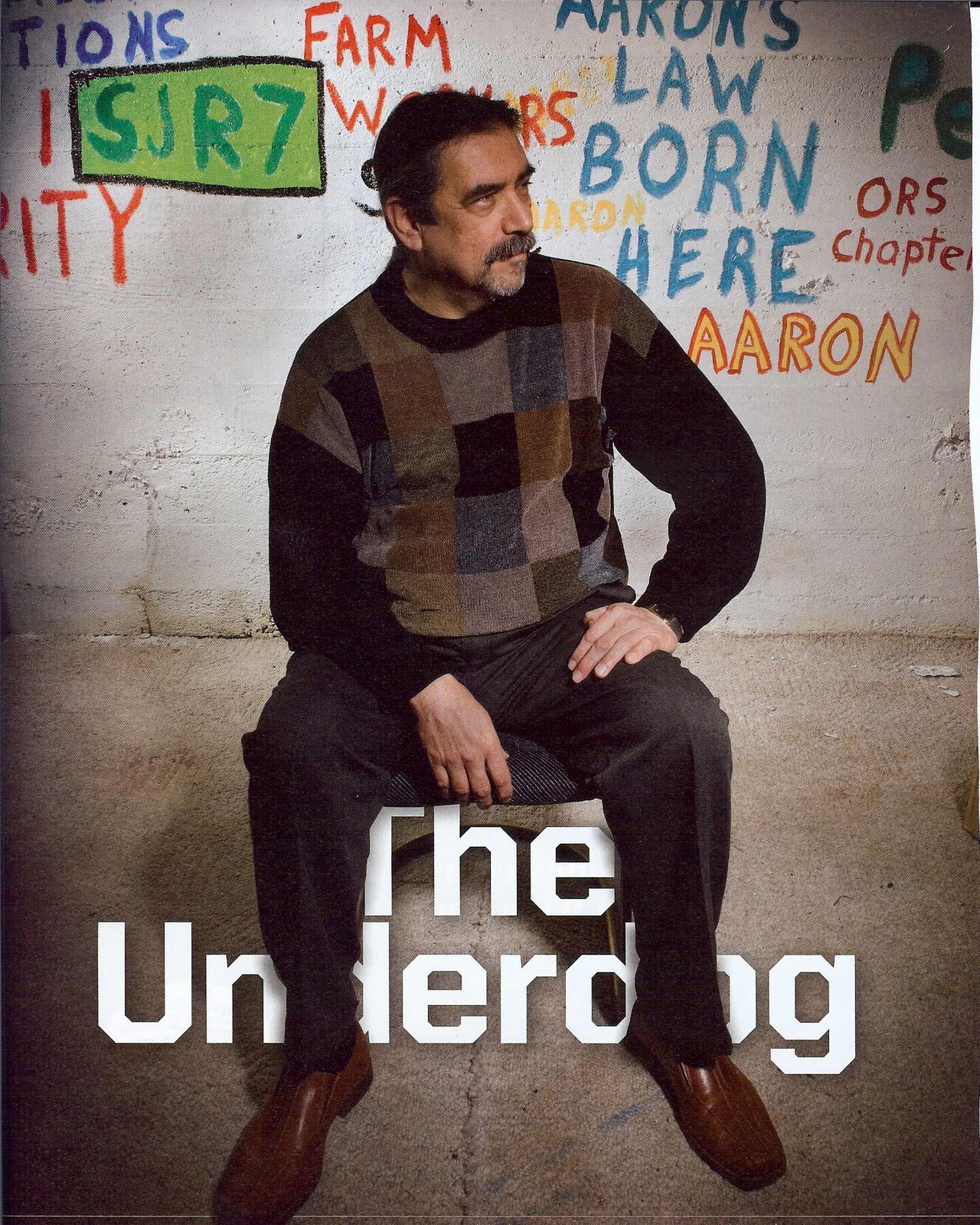
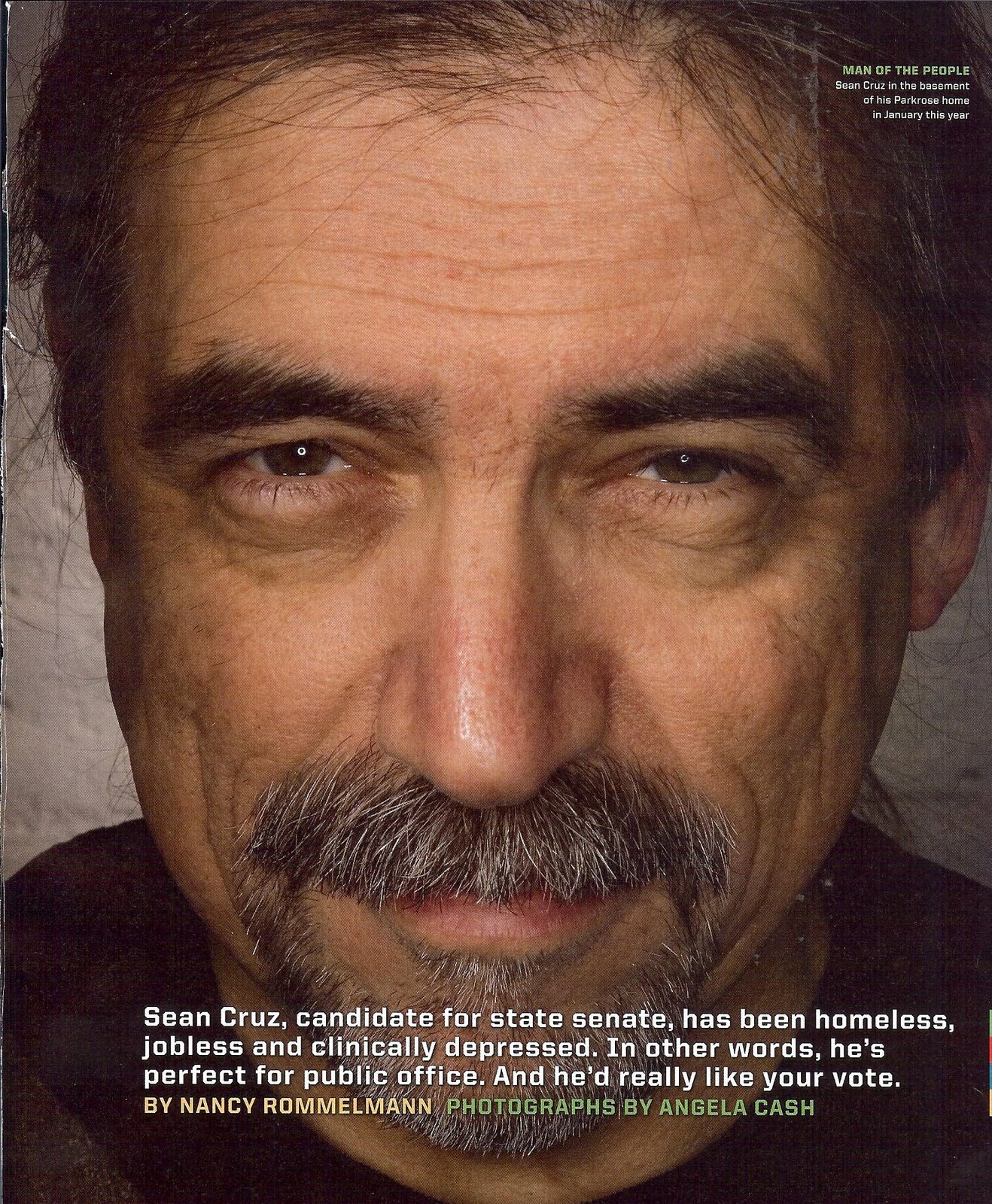
Sean Cruz is Executive Director of 1000 Nations, a public policy research and consulting firm. He is a co-founder of The Friends of Celilo Falls, a new non-profit organizing to secure the recovery of Celilo Falls under the stewardship of the Columbia River Tribes, and co-author and editor of The Militarization of Indian Country with Winona LaDuke (2012). He is the survivor of the abduction of his four children, who disappeared into Utah in a Mormon abduction in 1996.
He served in the Oregon legislature as Senator Avel Louise Gordly’s chief of staff for six years (2003-2007) and led the workgroup that produced Oregon’s landmark child abduction statute, Senate Bill 1041, in 2005. SB 1041 is also called “Aaron’s Law” in memory of Sean’s late son Aaron Cruz, who died in the course of the Mormon kidnapping. He is a Chicano, of Mexican and Irish ancestry, Raza, mestizo, a descendant of ancient people who thrived on this continent long before any son of a bitch named Christopher Columbus or that Spanish bastard Cortes arrived.


 Posts
Posts