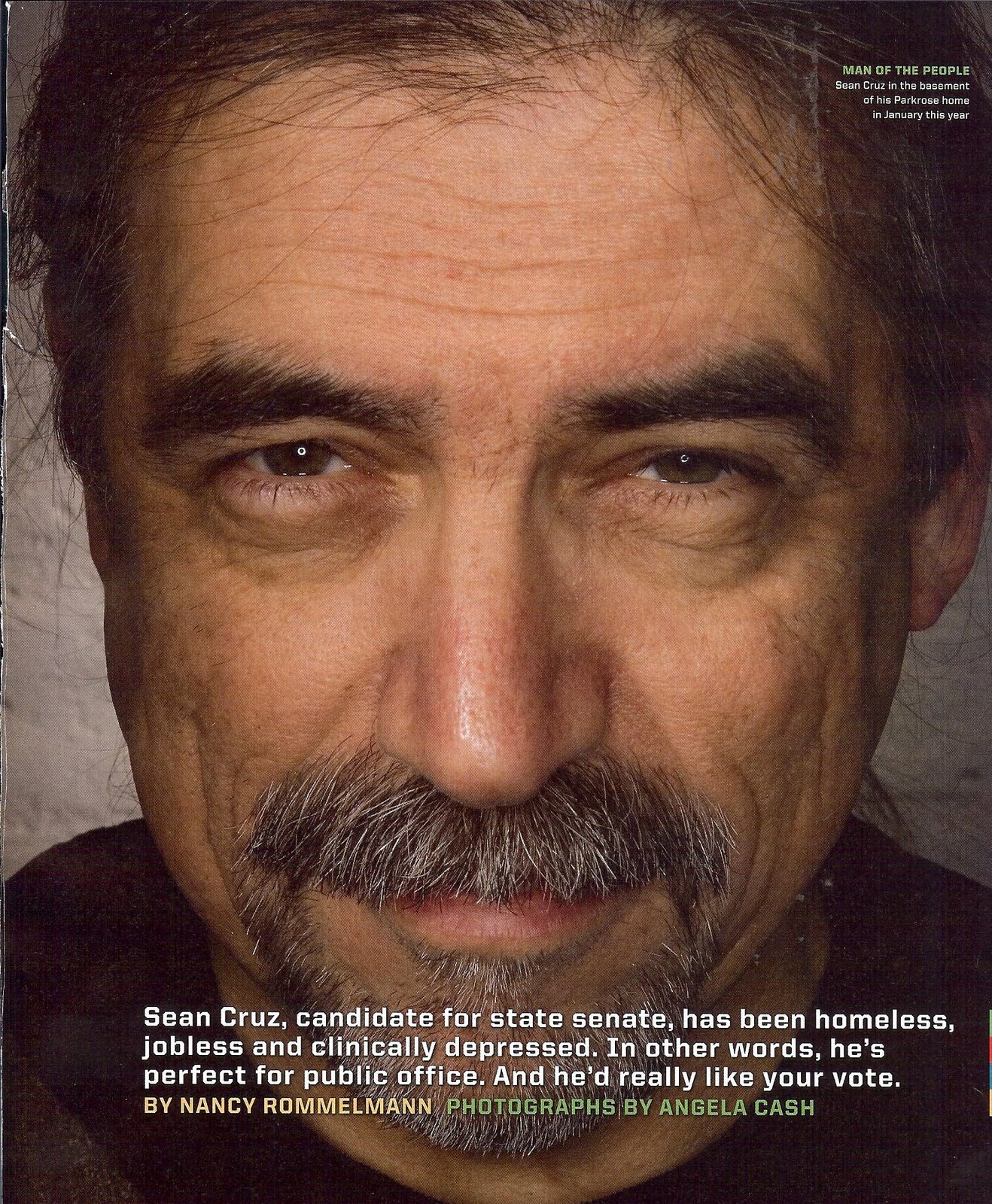
By Sean Cruz
Portland, Oregon— National Missing Children’s Day is May 25. It is not a holiday, but the one day in the entire year that the families of thousands of missing children hope to have your attention. With very few exceptions, each grief-stricken family is entirely on its own in its search, and with few exceptions, the children were abducted by a parent or family member.
Each year, according to the US Department of Justice, more than 200,000 US children suffer the trauma of abduction by a parent or family member, some repeatedly. It is difficult to track the number of Oregon cases, because no Oregon policing agency keeps a record, not even the Oregon State Police.
An international child abduction case that originated in Oregon made the local news briefly recently and then vanished (just as the child had a year and a half before) a victim of the news cycle, before the Marenco case could illuminate the several public policy issues related to parental, family and church-sponsored kidnappings that are the real story here.
The National Center for Missing and Children currently identifies 17 Oregon children who are not listed as missing on the Oregon State Police Missing Children’s Clearinghouse website. Although more than a dozen international police agencies were involved in recovering the Marenco child, he never appeared on the OSP list.
The recovery of the Marenco child required the cooperation of courts in Washington County and in New Zealand, and “The following agencies/organizations have assisted the Beaverton Police Department with the Marenco case: Interpol, US Department of State, US Customs and Border Protection, US Marshals Service, US Federal Air Marshals Service, US DHS-ICE Homeland Security Investigations , National Center for Missing and Exploited Children, Washington County District Attorney's Office, Washington County Sheriff's Office, Forest Grove Police Department, Government Agencies in New Zealand, Australia and Canada , San Francisco Police Department , San Mateo County Sheriff's Office.”
International abductions are on the rise due to corresponding increases in international marriages and child-producing relationships, and subsequent divorces and breakups. The convenience of international travel also plays a role, as do religious and cultural differences between the couples.
The media is rarely interested in reporting parental and family abductions, largely because law enforcement rarely acts, and there is so much else going on to fill the newscast or the page. After a day or two, a parental abduction story is old news if it was ever news at all. The family is on its own.
In fact, the only child to make the OSP list in the past five years is Kyron Horman. The Horman case also illustrates how difficult and painful child kidnappings are to resolve. The focus needs to be on prevention and deterrence.
The discrepancies in the lists of missing kids indicates that the Oregon State Police is not involved in looking for any of them, and also illustrates how easily a parentally-abducted child can slip through the cracks.
The fact that so many agencies were involved in recovering the child from New Zealand demonstrates how difficult it is to recover a child abducted to a foreign nation, even if both nations speak English and have similar court systems.
These facts, and the finding by the 2004 Oregon Senate President’s Task Force on Parental and Family Abductions that child abduction by any person is child abuse, point to the need to enact policies that discourage people from abducting their own children, or a family member’s children, or through a church-sponsored shunning/abduction, in the first place.
For the purposes of marking National Missing Children’s Day in Oregon, why don’t we take a look at those 17 Oregon kids who are missing enough to be listed on the National Center’s website, but not missing enough to be listed by our own Oregon State Police.
What does a missing kid have to do to get some attention from the Oregon State Police?
Showing posts with label Oregon State Police. Show all posts
Showing posts with label Oregon State Police. Show all posts
Friday, May 25, 2012


Thursday, May 17, 2012
A case of Oregon child abduction, Kyron Horman and the news cycle
By Sean Cruz
Portland, Oregon—
An international child abduction case that originated in Oregon made the local news briefly yesterday and then vanished (just as the child had a year and a half ago) a victim of the news cycle, before the story could illuminate the several public policy issues related to parental, family and church-sponsored kidnappings that are the real story here.
Non-stranger abductions rarely make the news at all, although the US Department of Justice reports more than 200,000 cases taking place each year, with international abductions on the rise due to the corresponding increases in international marriages and child-producing relationships, and subsequent divorces and breakups. The convenience of international travel also plays a role.
I first heard of the Marenco case when a reporter from KOIN 6 contacted me around noon and asked for an interview. In her research, she had become aware of the abduction of my four children and Aaron’s Law, and wanted my comments on videotape for the piece they were going to run that evening. She sent me the Beaverton Police Department’s media release, the news team came over a couple of hours later, and we talked.
I told KOIN 6 that they were only the third news agency to contact me in the 16 years since my children were abducted: The Oregonian in 1996; OPB in 2005 after the passage of Aaron’s Law, and out of the blue, KOIN 6 today.
The media is rarely interested in reporting parental and family abductions, largely because law enforcement rarely acts, and there is so much else going on to fill the time or the page. After a day or two, a parental abduction story is old news if it was ever news at all.
As it turned out, competing local news stories swamped the day, the story was reported but too short to examine the issues, and time marches on…. Here’s the link to the broadcast:
http://www.koinlocal6.com/mostpopular/story/Custody-battle-ends-with-arrest-reunion/ZcMlOzw_UUKle5uv5qubxw.cspx
Had there been time, I would have wanted to discuss the first two issues I was curious about in the Beaverton PD press release.
The absence of the Oregon State Police caught my attention immediately, and the fact that the abducted child never made the Oregon State Police Missing Children Clearinghouse list despite the easily demonstrable fact that all of these other policing agencies had identified the child as abducted. That issue also bears examination.
In fact, the only child to make the OSP list in the past five years is Kyron Horman. This case also illustrates how difficult and painful child kidnappings are to resolve. The focus needs to be on deterrence.
I’ve written about the deficiencies of the OSP Clearinghouse in the past, in a piece titled “Oregon’s Museum of Missing Children and the child sex trade”, posted on The Oregonian’s blog in 2010:
http://blog.oregonlive.com/myoregon/2010/11/oregons_museum_of_missing_chil.html
The recovery of the abducted Marenco child required the cooperation of courts in Washington County and in New Zealand. The media release credits:
The following agencies/organizations have assisted the Beaverton Police Department with the Marenco case:
Interpol
US Department of State
US Customs and Border Protection
US Marshals Service
US Federal Air Marshals Service
US DHS-ICE Homeland Security Investigations
National Center for Missing and Exploited Children
Washington County District Attorney's Office
Washington County Sheriff's Office
Forest Grove Police Department
Government Agencies in New Zealand, Australia and Canada
San Francisco Police Department
San Mateo County Sheriff's Office
The National Center for Missing and Exploited Children was involved in the Marenco recovery, and a quick search there turns up a list of children abducted from Oregon that includes 17 children who are not listed on the OSP site. That's right, 17 children.
http://www.missingkids.com/
The discrepancies in the lists of missing kids indicate that the Oregon State Police is not involved in looking for any of them, and also illustrates how easily a parentally-abducted child can slip through the cracks.
The fact that so many agencies were involved in recovering the child from New Zealand demonstrates how difficult it is to recover a child abducted to a foreign nation (or to theocratic Mormon Utah), even if both nations speak English and have similar court systems.
These facts, and the finding by the 2004 Senate President’s Task Force on Parental and Family Abductions that child abduction by any person is child abuse, point to the need to enact policies that discourage people from abducting their own children, or a family member’s children, or through a church-sponsored shunning/abduction, in the first place.
That is precisely why Aaron’s Law is so important. Fear of prosecution and jail time is clearly not an effective deterrent, which explains the high numbers. The fact is that parental and family abduction cases are rarely prosecuted, and yet the child(ren) remain(s) missing.
Aaron’s Law takes a different approach to deterring and resolving child abductions, and with the passage of Senate Bill 1041, Oregon became the first and only state in the nation where child abduction creates a civil cause of action.
A deterrent can only be effective if the public knows it exists and, sadly, the KOIN 6 story fell short of that.
It is highly unlikely that Mr. Marenco was aware of Aaron’s Law before he took the child, but now he faces civil as well as criminal consequences under SB 1041, at Mrs. Marenco’s option, including counseling directed at educating Mr. Marenco to the harm his conduct is causing his own child.
Mr. Marenco will also have to answer to his son once he reaches adulthood, as would any other person or organization that aided or abetted the abduction.
Under Aaron’s Law, child victims have future recourse against any party who violated Oregon’s Custodial Interference I statute by participating materially in “taking, enticing or keeping” (the child) “from the child’s lawful custodian or in violation of a valid joint custody order.” Once the child victim becomes an adult, he or she will have three years to file the civil action.
These facts should encourage Mr. Marenco to stay on everyone’s good side for a long time, but all of this trouble, expense and pain might have been avoidable, if he had known the extent of his risk, and a reminder that child abduction by any person is abusive to the child.
This will take many news cycles to accomplish.
According to a Washington County judge, I have the Wisdom and the Moral Authority to speak on these issues:
http://www.blogoliticalsean.blogspot.com/2012/04/wisdom-and-moral-authority.html
Portland, Oregon—
An international child abduction case that originated in Oregon made the local news briefly yesterday and then vanished (just as the child had a year and a half ago) a victim of the news cycle, before the story could illuminate the several public policy issues related to parental, family and church-sponsored kidnappings that are the real story here.
Non-stranger abductions rarely make the news at all, although the US Department of Justice reports more than 200,000 cases taking place each year, with international abductions on the rise due to the corresponding increases in international marriages and child-producing relationships, and subsequent divorces and breakups. The convenience of international travel also plays a role.
I first heard of the Marenco case when a reporter from KOIN 6 contacted me around noon and asked for an interview. In her research, she had become aware of the abduction of my four children and Aaron’s Law, and wanted my comments on videotape for the piece they were going to run that evening. She sent me the Beaverton Police Department’s media release, the news team came over a couple of hours later, and we talked.
I told KOIN 6 that they were only the third news agency to contact me in the 16 years since my children were abducted: The Oregonian in 1996; OPB in 2005 after the passage of Aaron’s Law, and out of the blue, KOIN 6 today.
The media is rarely interested in reporting parental and family abductions, largely because law enforcement rarely acts, and there is so much else going on to fill the time or the page. After a day or two, a parental abduction story is old news if it was ever news at all.
As it turned out, competing local news stories swamped the day, the story was reported but too short to examine the issues, and time marches on…. Here’s the link to the broadcast:
http://www.koinlocal6.com/mostpopular/story/Custody-battle-ends-with-arrest-reunion/ZcMlOzw_UUKle5uv5qubxw.cspx
Had there been time, I would have wanted to discuss the first two issues I was curious about in the Beaverton PD press release.
The absence of the Oregon State Police caught my attention immediately, and the fact that the abducted child never made the Oregon State Police Missing Children Clearinghouse list despite the easily demonstrable fact that all of these other policing agencies had identified the child as abducted. That issue also bears examination.
In fact, the only child to make the OSP list in the past five years is Kyron Horman. This case also illustrates how difficult and painful child kidnappings are to resolve. The focus needs to be on deterrence.
I’ve written about the deficiencies of the OSP Clearinghouse in the past, in a piece titled “Oregon’s Museum of Missing Children and the child sex trade”, posted on The Oregonian’s blog in 2010:
http://blog.oregonlive.com/myoregon/2010/11/oregons_museum_of_missing_chil.html
The recovery of the abducted Marenco child required the cooperation of courts in Washington County and in New Zealand. The media release credits:
The following agencies/organizations have assisted the Beaverton Police Department with the Marenco case:
Interpol
US Department of State
US Customs and Border Protection
US Marshals Service
US Federal Air Marshals Service
US DHS-ICE Homeland Security Investigations
National Center for Missing and Exploited Children
Washington County District Attorney's Office
Washington County Sheriff's Office
Forest Grove Police Department
Government Agencies in New Zealand, Australia and Canada
San Francisco Police Department
San Mateo County Sheriff's Office
The National Center for Missing and Exploited Children was involved in the Marenco recovery, and a quick search there turns up a list of children abducted from Oregon that includes 17 children who are not listed on the OSP site. That's right, 17 children.
http://www.missingkids.com/
The discrepancies in the lists of missing kids indicate that the Oregon State Police is not involved in looking for any of them, and also illustrates how easily a parentally-abducted child can slip through the cracks.
The fact that so many agencies were involved in recovering the child from New Zealand demonstrates how difficult it is to recover a child abducted to a foreign nation (or to theocratic Mormon Utah), even if both nations speak English and have similar court systems.
These facts, and the finding by the 2004 Senate President’s Task Force on Parental and Family Abductions that child abduction by any person is child abuse, point to the need to enact policies that discourage people from abducting their own children, or a family member’s children, or through a church-sponsored shunning/abduction, in the first place.
That is precisely why Aaron’s Law is so important. Fear of prosecution and jail time is clearly not an effective deterrent, which explains the high numbers. The fact is that parental and family abduction cases are rarely prosecuted, and yet the child(ren) remain(s) missing.
Aaron’s Law takes a different approach to deterring and resolving child abductions, and with the passage of Senate Bill 1041, Oregon became the first and only state in the nation where child abduction creates a civil cause of action.
A deterrent can only be effective if the public knows it exists and, sadly, the KOIN 6 story fell short of that.
It is highly unlikely that Mr. Marenco was aware of Aaron’s Law before he took the child, but now he faces civil as well as criminal consequences under SB 1041, at Mrs. Marenco’s option, including counseling directed at educating Mr. Marenco to the harm his conduct is causing his own child.
Mr. Marenco will also have to answer to his son once he reaches adulthood, as would any other person or organization that aided or abetted the abduction.
Under Aaron’s Law, child victims have future recourse against any party who violated Oregon’s Custodial Interference I statute by participating materially in “taking, enticing or keeping” (the child) “from the child’s lawful custodian or in violation of a valid joint custody order.” Once the child victim becomes an adult, he or she will have three years to file the civil action.
These facts should encourage Mr. Marenco to stay on everyone’s good side for a long time, but all of this trouble, expense and pain might have been avoidable, if he had known the extent of his risk, and a reminder that child abduction by any person is abusive to the child.
This will take many news cycles to accomplish.
According to a Washington County judge, I have the Wisdom and the Moral Authority to speak on these issues:
http://www.blogoliticalsean.blogspot.com/2012/04/wisdom-and-moral-authority.html
Thursday, November 04, 2010
Abducted child vs stolen car: A problem of priorities
By Sean Cruz
Portland, Oregon—
“Guns drawn, everyone out and down on the ground!”
That’s how the officer described what would happen if the police encountered whoever was driving my freshly-stolen car, just last week.
He wanted me to know this because, although finding the car myself would be extremely unlikely, it does happen, and if I did happen to find it, I should report that fact before driving it anywhere, because I could also find myself facing an abrupt out-of-the-car-and-down-on-the-ground-at-gunpoint situation, and however unlikely that might be, it would be good advice to keep in mind.
Less than two hours after I had reported it stolen, information about my recently-departed red Subaru was already in the Law Enforcement Database and police agencies had been alerted from the Canadian border down to Mexico, and from the Oregon coast eastward to the Mississippi River.
As I listened to the officer, I reflected back nearly fifteen years ago, when I had reported the disappearance of my four children to local law enforcement, taken in what I would learn was a Mormon abduction as much as it was a parental and family abduction, and how differently law enforcement handled the case.
The bottom-line point I want to make here is that while Oregon law enforcement agencies maintain and share lists of stolen vehicles, there is no comparable list of abducted children anywhere throughout the state.
This dichotomy exposes one of the major gaps that abducted children fall through, particularly if the suspected kidnapper is a parent or family member.
The structural problem lies in the fact that local law enforcement agencies handle each case of abducted or missing children in their own way, with little or no sharing of information with other agencies or with the Oregon State Police Missing Children’s Clearinghouse.
The OSP Missing Children’s Clearinghouse has added only one new name to its short list in the past three years.
The Senate Interim Task Force on Parental and Family Abductions became aware of the problem in 2004 and considered legislation to correct it, but was dissuaded as reported to the Senate President:
“The Task Force considered legislation that would have required that all local law enforcement agencies report missing children to the Oregon State Police Missing Children’s Clearinghouse.
“However, after the State Police and the Department of Justice met and discussed the issue, they determined that the State Police could obtain this information by an administrative process that will automatically notify the Missing Children’s Clearinghouse of all reports of missing children made by state, county and local law enforcement agencies. Consequently, the Task Force decided that this legislation is not needed.” –Final Report, Senate Interim Task Force on Parental and Family Abductions, 2004.
It is important to understand what is being stated here:
1. The Task Force wanted to require that all Oregon local law enforcement agencies report all cases of missing or abducted children to the OSP Missing Children’s Clearinghouse, because they were not doing so on their own.
2. The OSP stated that they could get the information from local law enforcement by administrative rule, convincing the Task Force not to press legislation.
3. The OSP never implemented the rule, which would have created a list of all cases of abducted or missing children reported in Oregon.
The Task Force determined that Oregon has its per capita share of the more than 200,000 cases of parental and family abductions that take place in the USA each year, yet the Oregon State Police has added only one name, that of Kyron Horman, to its Missing Children’s Clearinghouse list in the past three years.
A few months ago, a father from southern Oregon whose 3-year-old daughter went missing with the child’s mother in July contacted me. Local law enforcement had told him that his missing child did not “meet the criteria” for any actual action by law enforcement, including adding his missing child to the State Police list of missing Oregon children, or notifying law enforcement in other jurisdictions of the missing child…and yet there was a child missing….
The phrase “does not meet the criteria” struck me when I took the call, because I was already planning to write about the subject, which came up during a press conference on the Kyron Horman abduction on July 23, when Sheriff Dan Staton
responded to a series of questions, including this one:
Q: How many other children are considered missing/endangered in Multnomah County at this time, aside from Kyron?
“There are no other cases that meet this criteria,” he said.
“This criteria” may have included the fact that one of Kyron’s close family members is a police detective, giving the family instant credibility with law enforcement.
Coupled with the fact that Kyron’s disappearance was originally thought to be a stranger abduction (since no one else was missing), the family’s call to 911 quickly led to the largest search for a missing child in the history of the state.
The OSP could hardly ignore that.
The Oregon State Police Missing Children Clearinghouse maintains a list of abducted or otherwise missing children, which stands currently at 41 children.
More than half of these children have been missing for decades, and the only child that has “met the criteria” to make the OSP list in the past three years is Kyron Horman….
The US Department of Justice has reported no decrease in the number of abducted children, tallied at more than 200,000 annually for more than a dozen years, signaling that not enough is being done to address the problem.
People abduct their own children or other family members in large part because they are likely to get away with it, to suffer no consequences for their part in the crime, partially explaining why the number is so high.
The failure of law enforcement to utilize the same technological resources that enable them to instantly notify agencies across every jurisdictional level or locale about my stolen Subaru, to reach the same agencies with reports of abducted or missing children is difficult enough to understand.
The Task Force report documents the fact that OSP and the Department of Justice became aware of both the problem and the solution through the course of the Task Force’s work, and yet have done nothing to correct it.
We all live complicated lives. Imagine for a moment how complicated your life would be if your child was abducted, and you found out that your child’s’ name wasn’t on the list, because there was no list.
It is not a question of knowledge or awareness; the Task Force report and the OSP’s addition of just a single name in the past three years indicates that this is a problem of policy, a problem of priorities, a matter of choosing to value stolen property over stolen lives.
--Sean Cruz, November 2010
Portland, Oregon—
“Guns drawn, everyone out and down on the ground!”
That’s how the officer described what would happen if the police encountered whoever was driving my freshly-stolen car, just last week.
He wanted me to know this because, although finding the car myself would be extremely unlikely, it does happen, and if I did happen to find it, I should report that fact before driving it anywhere, because I could also find myself facing an abrupt out-of-the-car-and-down-on-the-ground-at-gunpoint situation, and however unlikely that might be, it would be good advice to keep in mind.
Less than two hours after I had reported it stolen, information about my recently-departed red Subaru was already in the Law Enforcement Database and police agencies had been alerted from the Canadian border down to Mexico, and from the Oregon coast eastward to the Mississippi River.
As I listened to the officer, I reflected back nearly fifteen years ago, when I had reported the disappearance of my four children to local law enforcement, taken in what I would learn was a Mormon abduction as much as it was a parental and family abduction, and how differently law enforcement handled the case.
The bottom-line point I want to make here is that while Oregon law enforcement agencies maintain and share lists of stolen vehicles, there is no comparable list of abducted children anywhere throughout the state.
This dichotomy exposes one of the major gaps that abducted children fall through, particularly if the suspected kidnapper is a parent or family member.
The structural problem lies in the fact that local law enforcement agencies handle each case of abducted or missing children in their own way, with little or no sharing of information with other agencies or with the Oregon State Police Missing Children’s Clearinghouse.
The OSP Missing Children’s Clearinghouse has added only one new name to its short list in the past three years.
The Senate Interim Task Force on Parental and Family Abductions became aware of the problem in 2004 and considered legislation to correct it, but was dissuaded as reported to the Senate President:
“The Task Force considered legislation that would have required that all local law enforcement agencies report missing children to the Oregon State Police Missing Children’s Clearinghouse.
“However, after the State Police and the Department of Justice met and discussed the issue, they determined that the State Police could obtain this information by an administrative process that will automatically notify the Missing Children’s Clearinghouse of all reports of missing children made by state, county and local law enforcement agencies. Consequently, the Task Force decided that this legislation is not needed.” –Final Report, Senate Interim Task Force on Parental and Family Abductions, 2004.
It is important to understand what is being stated here:
1. The Task Force wanted to require that all Oregon local law enforcement agencies report all cases of missing or abducted children to the OSP Missing Children’s Clearinghouse, because they were not doing so on their own.
2. The OSP stated that they could get the information from local law enforcement by administrative rule, convincing the Task Force not to press legislation.
3. The OSP never implemented the rule, which would have created a list of all cases of abducted or missing children reported in Oregon.
The Task Force determined that Oregon has its per capita share of the more than 200,000 cases of parental and family abductions that take place in the USA each year, yet the Oregon State Police has added only one name, that of Kyron Horman, to its Missing Children’s Clearinghouse list in the past three years.
A few months ago, a father from southern Oregon whose 3-year-old daughter went missing with the child’s mother in July contacted me. Local law enforcement had told him that his missing child did not “meet the criteria” for any actual action by law enforcement, including adding his missing child to the State Police list of missing Oregon children, or notifying law enforcement in other jurisdictions of the missing child…and yet there was a child missing….
The phrase “does not meet the criteria” struck me when I took the call, because I was already planning to write about the subject, which came up during a press conference on the Kyron Horman abduction on July 23, when Sheriff Dan Staton
responded to a series of questions, including this one:
Q: How many other children are considered missing/endangered in Multnomah County at this time, aside from Kyron?
“There are no other cases that meet this criteria,” he said.
“This criteria” may have included the fact that one of Kyron’s close family members is a police detective, giving the family instant credibility with law enforcement.
Coupled with the fact that Kyron’s disappearance was originally thought to be a stranger abduction (since no one else was missing), the family’s call to 911 quickly led to the largest search for a missing child in the history of the state.
The OSP could hardly ignore that.
The Oregon State Police Missing Children Clearinghouse maintains a list of abducted or otherwise missing children, which stands currently at 41 children.
More than half of these children have been missing for decades, and the only child that has “met the criteria” to make the OSP list in the past three years is Kyron Horman….
The US Department of Justice has reported no decrease in the number of abducted children, tallied at more than 200,000 annually for more than a dozen years, signaling that not enough is being done to address the problem.
People abduct their own children or other family members in large part because they are likely to get away with it, to suffer no consequences for their part in the crime, partially explaining why the number is so high.
The failure of law enforcement to utilize the same technological resources that enable them to instantly notify agencies across every jurisdictional level or locale about my stolen Subaru, to reach the same agencies with reports of abducted or missing children is difficult enough to understand.
The Task Force report documents the fact that OSP and the Department of Justice became aware of both the problem and the solution through the course of the Task Force’s work, and yet have done nothing to correct it.
We all live complicated lives. Imagine for a moment how complicated your life would be if your child was abducted, and you found out that your child’s’ name wasn’t on the list, because there was no list.
It is not a question of knowledge or awareness; the Task Force report and the OSP’s addition of just a single name in the past three years indicates that this is a problem of policy, a problem of priorities, a matter of choosing to value stolen property over stolen lives.
--Sean Cruz, November 2010
Thursday, September 30, 2010
Kyron Horman, the List of Abducted Children and "Meeting the Criteria", part 1
By Sean Cruz
Portland, Oregon--
Every now and then a child is abducted somewhere in Oregon, and some weeks or months later, I receive a phone call from the child’s parent….
Their story is always the same: It has been weeks or months since they last knew the location of their child…the child disappeared with the other parent, who has fled the state…they’ve been to the police…they’ve been to the courts…they cannot find anyone in the system who is willing to help…the media doesn’t see a reason to get involved…and yet their child is still missing….
They contact me because they have been searching for help on line, and their search has led them to Aaron’s Law, Oregon’s landmark 2005 anti-kidnapping statute, named for my late son Aaron Cruz, and to my blogs, and they’ve read about the law, and they are calling me because they are desperate for advice….
Most don’t have the money to hire a lawyer, much less the resources to hire a private investigator to go out and find their abducted child, and they are mostly men, men who are trying to keep their lives steady while facing the reality, the horror, that they may never see their child again….
Some, like the most recent case, a father who called me a week ago from southern Oregon whose 3-year-old daughter went missing in July, have been told by local law enforcement that their missing child does not “meet the criteria” for any actual action by law enforcement, including adding their missing child to the State Police list of missing Oregon children, or notifying law enforcement in other jurisdictions of the missing child…and yet there is a child who is missing….
The phrase “does not meet the criteria” struck me when I took the call, because I was already planning to write about the subject, which came up during a press conference on the Kyron Horman abduction on July 23, when Washington County Sheriff Dan Staton responded to a series of question, including this one:
Q: How many other children are considered missing/endangered in Multnomah County at this time, aside from Kyron?
“There are no other cases that meet this criteria,” he said.
The Oregon State Police Missing Children Clearinghouse maintains a list of abducted or otherwise missing children, which stands currently at 41 children.
More than half of these children have been missing for decades, and the only child that has “met the criteria” to make the list in the past three years is Kyron Horman….
The Oregon State Police website has a “spotlight” featuring five of these missing children, with Kyron’s name at the top of the list:
The National Center for Missing and Exploited Children has a list of missing Oregon children, but it is a different list....
Portland, Oregon--
Every now and then a child is abducted somewhere in Oregon, and some weeks or months later, I receive a phone call from the child’s parent….
Their story is always the same: It has been weeks or months since they last knew the location of their child…the child disappeared with the other parent, who has fled the state…they’ve been to the police…they’ve been to the courts…they cannot find anyone in the system who is willing to help…the media doesn’t see a reason to get involved…and yet their child is still missing….
They contact me because they have been searching for help on line, and their search has led them to Aaron’s Law, Oregon’s landmark 2005 anti-kidnapping statute, named for my late son Aaron Cruz, and to my blogs, and they’ve read about the law, and they are calling me because they are desperate for advice….
Most don’t have the money to hire a lawyer, much less the resources to hire a private investigator to go out and find their abducted child, and they are mostly men, men who are trying to keep their lives steady while facing the reality, the horror, that they may never see their child again….
Some, like the most recent case, a father who called me a week ago from southern Oregon whose 3-year-old daughter went missing in July, have been told by local law enforcement that their missing child does not “meet the criteria” for any actual action by law enforcement, including adding their missing child to the State Police list of missing Oregon children, or notifying law enforcement in other jurisdictions of the missing child…and yet there is a child who is missing….
The phrase “does not meet the criteria” struck me when I took the call, because I was already planning to write about the subject, which came up during a press conference on the Kyron Horman abduction on July 23, when Washington County Sheriff Dan Staton responded to a series of question, including this one:
Q: How many other children are considered missing/endangered in Multnomah County at this time, aside from Kyron?
“There are no other cases that meet this criteria,” he said.
The Oregon State Police Missing Children Clearinghouse maintains a list of abducted or otherwise missing children, which stands currently at 41 children.
More than half of these children have been missing for decades, and the only child that has “met the criteria” to make the list in the past three years is Kyron Horman….
The Oregon State Police website has a “spotlight” featuring five of these missing children, with Kyron’s name at the top of the list:
Samuel Boehlke has been missing for just over four years.
Jeremy Bright has been missing since 1986.
Karla Coronado has been missing for more than six years.
Carlos Cortez-Leon has been missing for eight years and two weeks.
Samuel Boehlke

Missing Date
10/14/2006
10/14/2006
Jeremy Bright

Missing Date
08/14/1986
08/14/1986
Karla Coronado

Missing Date
07/26/2004
07/26/2004
Carlos Cortez-Leon

Missing Date
10/14/2002
10/14/2002
At the bottom of the Spotlight feature is a link labeled “Click here to see all of Oregon’s missing children” that takes you to the page where 41 children are identified, where 40 of those children are the same children, year after year, where the Oregon State Police declares that these are all of the missing children, there are none other to be worried about….
But that list does not come close to identifying “all” of Oregon’s missing children, and it never has…it contains only the names of those children who have “met the criteria”….
The National Center for Missing and Exploited Children has a list of missing Oregon children, but it is a different list....
At the same time, law enforcement is aware that Oregon has its proportional share of parentally and family-abducted children, a number that the US Department of Justice calculates at more than 200,000 children a year, nationwide; you can do the math….
The fact is that no one has a list of all of Oregon’s missing and abducted children, no one…. No law enforcement agency in the state is required to keep or maintain a list, and so no list of missing children exists….
Only the list that “meets the criteria”….
End part 1
Subscribe to:
Posts (Atom)

 Posts
Posts