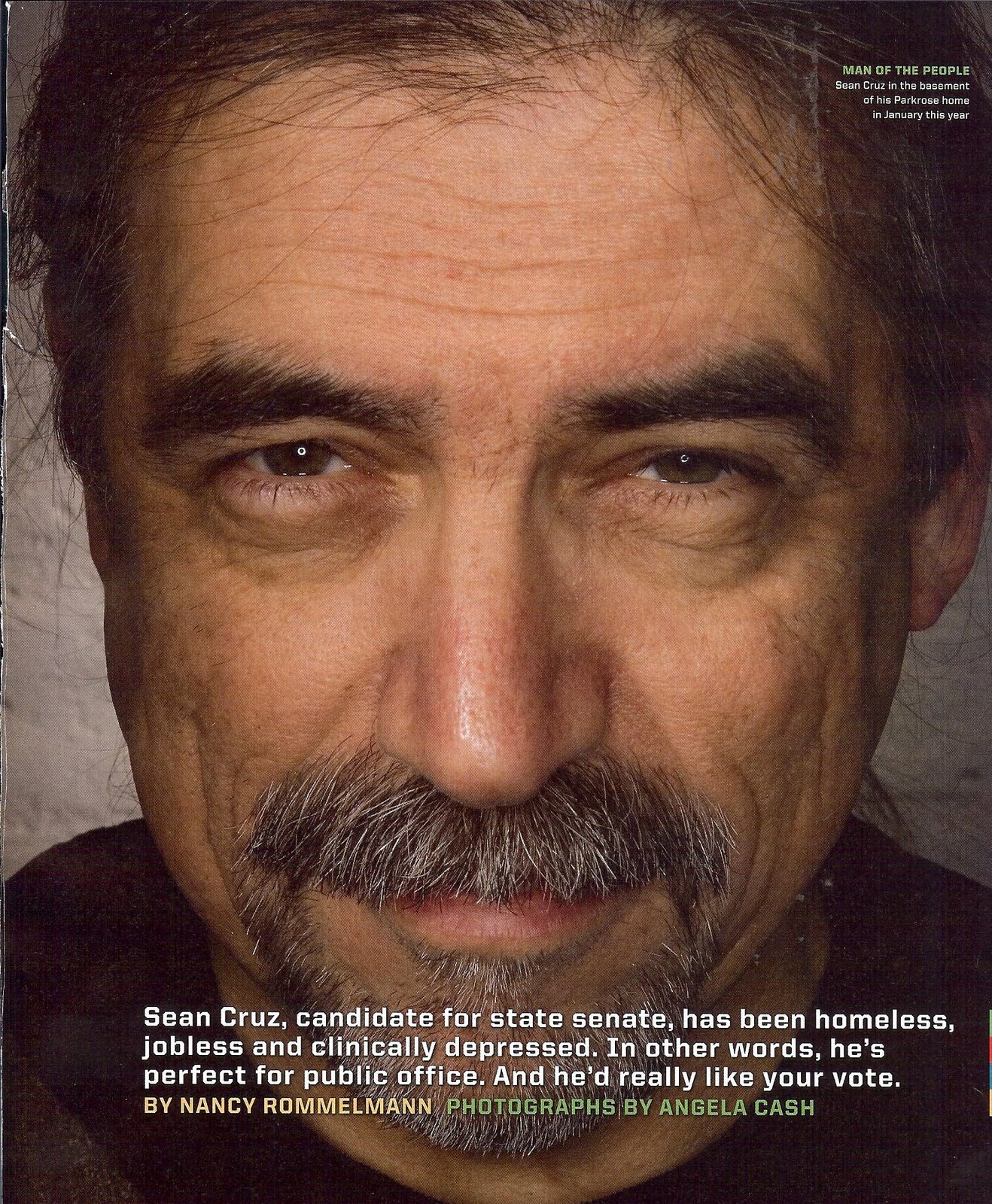
The first of three whistleblowing letters regarding the Oregon Human Development Corporation (OHDC) appears below.
I have taken some criticism for not following the chain of command, for going outside of the organization with these letters, but in actual fact I did so, much of that documented in internal emails to the OHDC Central Office.
The problem is that the OHDC chain of command goes no further than Fernando Guttierrez in the Central Office. This has been the case for many years, according to current and former OHDC employees.
Fernando insulates staff from Executive Director Ron Hauge and from OHDC's Board of Directors. OHDC provides no information to its employees regarding Mr. Hauge's activities or thinking, but rumors abound that he is rarely in his office, despite the charm of its 5th-floor views in Tigard. There is no evidence of any visioning by Mr. Hauge in either the short or long terms, and field staff have no information as to the future and direction of their employer.
Fernando also insulates staff from any information regarding the OHDC Board of Directors, its membership, meeting times and locations (if any) and agendas (if any).
The news that the economy is in crisis and unemployment rates soaring does not appear to have reached either Mr. Guttierrez or Mr. Hauge. More on this later.
As an Employment Specialist, my job was to find employment for clients seeking work, to monitor the status of employed clients over a period of time, and to submit signed reports to the Central Office. The most important reports are the quarterly status reports, which the Central Office uses to support its claims to the U.S. Department of Labor.
My employment began as the 2nd quarter 2008 reports were coming due, and there was intense pressure from the Central Office to get the forms filled out, signed and delivered.
I could see right away that the OHDC information system was a mess, because it didn't work. I learned from staff that no one knew how to make it work and that it had always been that way, which is why the organization functions on paper via fax and UPS.
I also saw that the status of many clients could not be confirmed, that many had not been seen or heard from in months. Fernando brushed that all aside, telling me to focus on a handful of current clients only, to ignore all the others.
It was easy to see that we would encounter the same problem when the next quarterly reports were due at the end of September.
I knew that I was not going to sign any document attesting that clients were being contacted by OHDC or were receiving services when I could find no evidence that this was the case.
Over the course of the summer, I received much pressure from the Central Office to remove from my case notes anything that did not support whatever claims OHDC was making to the feds. I refused to alter my notes. I will have more to say about this later in the series of posts.
Here's the 1st letter:
July 10, 2008
To Whom It May Concern:
Since entering employment at OHDC as Employment Specialist in the Gresham office on June 3, 2008, I have observed or become aware of a number of troubling issues, many long-term or endemic in the organization, that I have reason to believe are detrimental to its ability to fulfill its mission.
My observations are informed by my prior System Analyst experience in business computer systems, my family history as the son and grandson of Mexican farm workers, and by my position as Oregon State Senator Avel Gordly’s Chief of Staff. I have staffed Senator Gordly during her service on several Joint Ways and Means budget committees and on the Emergency Board since 2003.
Since many of the problems are related to OHDC’s computer and workflow systems, I will begin my comments in that area:
1. Observations re Information Services
There is no central file server in the OHDC system, and no backups in the field offices. Paper files are the only backup system in use.
All data is at perpetual risk of loss. All client files in the Gresham office reside on a single staff member’s computer, and I assume each office is configured the same way.
No two OHDC offices organize electronic files in the same way. The central office is currently attempting to standardize paper files, but no like effort is underway regarding electronic files.
Despite the ample provision of computer hardware in all of the offices, the OHDC information “system” ultimately operates via printouts sent (and often re-sent and re-sent again) between the central and field offices by fax and UPS. The organization essentially uses the computers as typewriters.
Nearly every management report pertaining to the requirements of the FJTP/WIA grant monies are keyed in by at least two employees, one in the central office and one in the field.
The OHDC electronic file system is chaotic, lacks any organizational concept or structure, and OHDC procedures require both field and central office employees to repeatedly re-enter data with no confidence that the result will be satisfactory in either the short or long term.
Paperwork errors in the central office and the workflow system itself creates unnecessary and unreasonable delays in clients’ receipt of reimbursement or other support funds and contributes to high levels of employee frustration.
Payments to clients or on behalf of clients are routinely held back by central office for one reason or another, often related to the illogical computer and workflow system that absolutely no one anywhere in the organization is master of.
The company providing computer support services has repeatedly made recommendations to OHDC to address these and other related issues, to no avail.
The Gresham office has a new ten-station flat-panel computer lab with overhead projection system for ESL instruction that mostly sits unused. The Rosetta Stone software that accompanies the lab does not work properly (or we lack any staff member who knows how to use it).
The OHDC website is badly in need of updating throughout. Board members are not identified, and no meetings or minutes are posted.
There are no recent OHCD success stories, identifying either client or employer partner, posted on the website.
It is doubtful that OHDC’s MIS staff has installed any traffic-analysis software on the company website that would provide information, for example, on who accesses the website and how they got there.
The online staff directory is months out of date.http://www.ohdc.org/directory.html
It is unclear what the role of the OHDC “MIS Manager” is, given all of the above.
It is also unclear what role other central office employees have in “managing” the OHDC system, and whether they have the qualifications to do so competently.
Some central office staff titles do not seem to correspond to actual duties, which appear to include monkeying ad hoc with the computer and workflow systems.
2. Staffing issue observations:
There are serious employee safety issues in the Gresham office, which is located in an area notorious for high rates of criminal gang activity. There is no active partnership with law enforcement in Rockwood, no alarm system or panic button for staff, and emergency exits are blocked due to the fear of intrusion from the rear of the building. Women feel particularly vulnerable.
Field office employee turnover is excessive.
Employee morale is low.
Opportunities for advancement within the organization for field staff personnel appear to be limited to the field offices alone.
Apparently, 100% of OHDC field office personnel are Hispanic and bilingual, but only a minority (1) of those in the central office are Hispanic or bilingual.
There appears to be little or no history of field employees successfully transitioning to central office positions.
Perhaps 40% of field office staff have been employed less than 6 months.
One experienced field office employee estimated that paperwork took up 40-50% of the employee’s time. My observation is that much of that paperwork is fruitless and reduces the employee’s opportunities to interact with either clients or employers.
3. Observations re clients and services
Central office employees are isolated from our clients; it is field office staff that deal with clients as human beings, not as numbers in a report.
There are scant records of successful placements and no active partnerships with employers in the Gresham area. This may be the case in other offices.
Employment Specialists are required to test the English proficiency of all new clients upon entry into the program, but no client progress reports of any kind are required of ESL instructors.
There is no record or report required of either (a) subject matter covered or (b) competency attained through the ESL class. The only measure of a client’s participation in ESL is the daily attendance sheet.
The central office routinely requires our clients to come into the field office any number of times to sign or re-sign forms without consideration for the trouble and expense imposed on the client, and with no sense that time is important to either staff or client.
For example, many of our clients need assistance to pay for the gasoline they must burn in order to get to the interviews we send them on, or to get to the job we have found for them, but there is no telling how long it will take for the central office to cut a check. The paperwork and process that the central office is developing will likely cause the value of the staff time required to exceed by far the cash value of the help provided to the client.
Our clients face overt racism and anti-immigrant hostility like no other population that is competing for these jobs. I am seeing Help Wanted ads for landscapers requiring English proficiency to mow lawns and trim bushes.
I have learned that only 20% of OHDC’s $ 1.8 million budget projected for the coming FY is allocated to client support services, the rest eaten up by overhead.
Closing comments and recommendations:
I believe that OHDC has many strengths upon which to build, but that several drastic steps are in order.
I also believe that—since our clients live on the thin margin and face significantly more difficult obstacles to stable employment in the present economic climate—the issue is urgent and remedial action must be taken immediately.
There is a major disconnect between the central office and the people we serve, brought upon in large part by the physical isolation of central office staff from the field offices and of the communities we serve, and by the astonishing lack of Hispanic employees and cultural competence within the central office.
Recommendations:
1. Change in leadership
2. Resolve file server and system backup issues.
3. Close central office and co-locate central office staff with field office providing direct services to reduce overhead and bring all staff into alignment with community and client needs.
4. Change at board level
Sincerely,
Sean Cruz
Monday, November 10, 2008


Thursday, November 06, 2008
White tide--not blue--sweeps Oregon House! The Senate is next!!
(Portland, Oregon) While the rest of the nation celebrates a transformational election that could not have taken place without minorities in general and Barack Obama in particular gaining access to political power at the state level, the Oregon legislature is making ready to convene in 2009 as its least-diverse body in decades.
In Oregon, it is the irony of stepping backward to pre-civil rights times as President-Elect Obama prepares to take residence in the White House that rises to historical proportions….
Sal Esquivel, a moderate Republican from southern Oregon, hung on to re-election by his fingernails. He will be the House of Representatives’ sole non-white member for the 2009-2011 biennium.
The irony…the irony….
And as it has for the past three biennia, the Oregon Democratic Party will sift out all of its non-white candidates in its partisan primaries and send a completely Caucasian House delegation to Salem. With a single exception, the same for the Senate.
Some say race is not a factor….
Some say affirmative action is no longer relevant, that equality has been reached….
Some say that Oregon’s partisan primary system works as intended….
…I’m sure that last one is the case….
After all, it was created in a day when only white men could own property or vote in an Oregon election….
This fact was reflected in the many Measure 37 hearings I monitored over the past several years. Those hearing rooms were always filled with white people; the proceedings completely irrelevant to Oregon’s minority populations.
Measure 37 looked back, you see, to those days when a person of color could not own or purchase property outside of certain urban areas in the state.
To have a Measure 37 claim, you pretty much had to be white….
How quickly people forget….
As a candidate for Senate District 23, the most racially and ethnically diverse senate district in Oregon, every endorsement interview I attended was conducted by a panel of 100% white people, with a single exception….
American Federation of Teachers (AFT): all white
Carpenters Union: all white; the one minority present left mid-interview
Firefighters: all white
Sierra Club: all white
Oregon League of Conservation Voters (OLCV): all white
Stand for Children: all white
Basic Rights: all white
SEIU: the single exception—one person in the room was also a minority
AFSCME: all white and already in the tank (see AFSCME-gate post)
Building Trades: all white
Planned Parenthood: all white
Oregon Education Association (OEA): all white
Portland Association of Teachers: all white
The panels themselves mostly consisted of paid lobbyists and a handful or less of union members ranging from hard core to novices.
Few of these interview panelists were actually constituents of the district I was seeking to represent.
As a Mexican-American, a Chicano, I have a lifetime of experience reading white people’s facial and body language. Most of these panelists had never sent a person of color to the legislature before, and had probably never seen the inside of the state capitol.
Those are big hurdles to overcome in a 15-20 minute interview.
I didn’t ask any of them for their money….
They already knew what they were going to do….
The Democratic Party of Multnomah County itself played no role in the primary process itself; did not host a single public event, no forums or debates, staged nothing that might pose a threat to its incumbents' ambitions.
The publicly-funded Oregon League of Minority Voters (OLMV) spent the entire primary period ignoring minority candidates for the Oregon legislature, running and hiding, ducking and dodging, slippin' and slidin', stayed far away from the question of who would succeed Senator Avel Gordly in the Oregon Senate and who would serve in her old House seat.
Many of the OLMV members, you see, are secret members of the Committee-Once-Bent-on-Renaming-Interstate Avenue AND signed on to my opponent’s campaign, and you get the picture….
Did I mention that the OLMV is funded with your tax money?
But that was the past, and now we look to the future of the state, and how its legislature will reflect its citizenry….
That may be a couple of decades in the future….
The Senate has only two persons of color among its 30 members. Republican Senator Jackie Winters and Democratic Senator Margaret Carter are probably serving their last terms before retirement.
And then there will be none….
The clearest path to the Oregon Senate is through the House, but there is no place for people of color there, not for Democrats.
Individually, the Members are all good, hard-working, dedicated people….
But collectively, as a reflection of the state’s racial and ethnic makeup, issues and priorities, they fail to meet the rhetoric of inclusion and democracy.
They do make the case for open primaries and other electoral reform, though.
Oregon’s partisan primary system keeps us mired back in the era where decisions were made in smoke-filled rooms….
There was plenty of smoke in those endorsement interview rooms I was in….
You couldn’t see it, but you sure could smell it.
Sean Cruz
November 6, 2008
In Oregon, it is the irony of stepping backward to pre-civil rights times as President-Elect Obama prepares to take residence in the White House that rises to historical proportions….
Sal Esquivel, a moderate Republican from southern Oregon, hung on to re-election by his fingernails. He will be the House of Representatives’ sole non-white member for the 2009-2011 biennium.
The irony…the irony….
And as it has for the past three biennia, the Oregon Democratic Party will sift out all of its non-white candidates in its partisan primaries and send a completely Caucasian House delegation to Salem. With a single exception, the same for the Senate.
Some say race is not a factor….
Some say affirmative action is no longer relevant, that equality has been reached….
Some say that Oregon’s partisan primary system works as intended….
…I’m sure that last one is the case….
After all, it was created in a day when only white men could own property or vote in an Oregon election….
This fact was reflected in the many Measure 37 hearings I monitored over the past several years. Those hearing rooms were always filled with white people; the proceedings completely irrelevant to Oregon’s minority populations.
Measure 37 looked back, you see, to those days when a person of color could not own or purchase property outside of certain urban areas in the state.
To have a Measure 37 claim, you pretty much had to be white….
How quickly people forget….
As a candidate for Senate District 23, the most racially and ethnically diverse senate district in Oregon, every endorsement interview I attended was conducted by a panel of 100% white people, with a single exception….
American Federation of Teachers (AFT): all white
Carpenters Union: all white; the one minority present left mid-interview
Firefighters: all white
Sierra Club: all white
Oregon League of Conservation Voters (OLCV): all white
Stand for Children: all white
Basic Rights: all white
SEIU: the single exception—one person in the room was also a minority
AFSCME: all white and already in the tank (see AFSCME-gate post)
Building Trades: all white
Planned Parenthood: all white
Oregon Education Association (OEA): all white
Portland Association of Teachers: all white
The panels themselves mostly consisted of paid lobbyists and a handful or less of union members ranging from hard core to novices.
Few of these interview panelists were actually constituents of the district I was seeking to represent.
As a Mexican-American, a Chicano, I have a lifetime of experience reading white people’s facial and body language. Most of these panelists had never sent a person of color to the legislature before, and had probably never seen the inside of the state capitol.
Those are big hurdles to overcome in a 15-20 minute interview.
I didn’t ask any of them for their money….
They already knew what they were going to do….
The Democratic Party of Multnomah County itself played no role in the primary process itself; did not host a single public event, no forums or debates, staged nothing that might pose a threat to its incumbents' ambitions.
The publicly-funded Oregon League of Minority Voters (OLMV) spent the entire primary period ignoring minority candidates for the Oregon legislature, running and hiding, ducking and dodging, slippin' and slidin', stayed far away from the question of who would succeed Senator Avel Gordly in the Oregon Senate and who would serve in her old House seat.
Many of the OLMV members, you see, are secret members of the Committee-Once-Bent-on-Renaming-Interstate Avenue AND signed on to my opponent’s campaign, and you get the picture….
Did I mention that the OLMV is funded with your tax money?
But that was the past, and now we look to the future of the state, and how its legislature will reflect its citizenry….
That may be a couple of decades in the future….
The Senate has only two persons of color among its 30 members. Republican Senator Jackie Winters and Democratic Senator Margaret Carter are probably serving their last terms before retirement.
And then there will be none….
The clearest path to the Oregon Senate is through the House, but there is no place for people of color there, not for Democrats.
Individually, the Members are all good, hard-working, dedicated people….
But collectively, as a reflection of the state’s racial and ethnic makeup, issues and priorities, they fail to meet the rhetoric of inclusion and democracy.
They do make the case for open primaries and other electoral reform, though.
Oregon’s partisan primary system keeps us mired back in the era where decisions were made in smoke-filled rooms….
There was plenty of smoke in those endorsement interview rooms I was in….
You couldn’t see it, but you sure could smell it.
Sean Cruz
November 6, 2008
Wednesday, October 22, 2008
Mismanagement, waste, workplace hostility and fraud uncovered at Oregon Human Development Corporation (OHDC)!!!
by Sean Cruz
Portland, Oregon--
The Oregon Human Development Corporation, based in Tigard, recruited and hired me in early June of this year (2008) to fill their vacant Employment Specialist position in the Gresham office, located in the Rockwood neighborhood.
Although I was not looking for another job at the time, I jumped at the opportunity to work with OHDC’s clientele of largely Mexican farm workers. I am the son and grandson of Mexican farm workers, and OHDC was offering me an opportunity to return to my roots and help others transition from seasonal or migrant work to more stable employment.
Since OHDC has held a monopoly on the U.S. Department of Labor’s Workforce Investment Act (WIA) Oregon funds under the National Farmworker Jobs Program (NFJP) for the past 29 years, I assumed that they were doing a good job.
Almost immediately after beginning employment at OHDC, however, I became aware of an alarming number of problems and issues within the organization that led me to act as a whistleblower, documenting my concerns in a series of three letters I sent to the U.S. Department of Labor and other parties in July.
Among the allegations documented in those three letters:
1. No one knows who the OHDC Board members are. They do not appear to meet. Any queries about the Board are met with resistance from OHDC Central Office management.
2. Many client files contain little information about the client. What is clear is a pattern: OHDC reports to its funders that clients receive frequent contact and that services are provided, but there is little or no evidence in the files to support those claims. As an Employment Specialist, I received constant pressure to provide positive reports regarding clients I had never seen nor spoken with.
3. OHDC’s workflow and computer systems may be the most dysfunctional in North America. God knows how they get away with this. The (appropriately titled) MIS Manager lives in another state, racking up frequent flyer miles at farm worker expense.
4. ESL classes are vital to client success, because lack of English skills are their greatest barrier to employment and advancement. Over a period of years, OHDC has represented that its Gresham clients receive ESL instruction, but the only record of such are attendance sheets. There is no requirement that the ESL instructor teach any specific curricula or meet any goals whatsoever other than to see that clients sign the attendance sheets. No one knows what—-if anything—-was taught in the class. The instructor was a personal friend of Fernando Guttierrez, who hired and re-hired her.
5. Despite the long monopoly of WIA grant funds across the entire state of Oregon, OHDC has no active employer partnerships, not even with the Hispanic Metropolitan Chamber of Commerce or any of its members. This is really hard to believe, trust me, but that speaks to the level of incompetence at Central Office management level and disinterest on the part of OHDC’s Board of Directors.
6. My recommendations were that change be implemented at both the Board and Central Office management levels, and that the Central Office be closed down, with its remaining positions co-located with field offices providing direct services.
None of this endeared me to the long-entrenched Central Office management, but I received a great deal of support and encouragement from both current and former OHDC employees, all of whom recognized that OHDC maintains a hostile work environment and has done so for years.
I never received a reply from the DOL or any of the other parties I had sent the letters to, but OHDC management sure came after me for contacting their funders.
OHDC’s management could not dispute much of what I had written because I had simply written out what any observer could see. Their anger was focused on the fact that I had contacted their long-time funders.
One of the distinctive characteristics of OHDC is the split between Central Office personnel and those employed around the state in its various field offices.
Central Office employees have generally been there for more than a decade, some since the beginning, and with a single exception are non-Hispanic and are not bilingual or bicultural, even though nearly 100% of OHDC clients are Spanish-speaking. Central Office employees view their positions as career-length, and plan to retire in place.
Field office employees are 100% bilingual and bicultural, and with a few exceptions, are either terminated or move on in less than a year. The turnover rate must rank among the highest in any industry, and OHDC clients rarely have the benefit of a long-term relationship with a case worker.
OHDC management suspended me with pay for a couple of weeks mid-summer, then brought me back under a Work Performance Plan that was actually impossible to meet. Some of its key deadlines had already passed; it required performance levels far greater than any historical OHDC achievements; and, the Central Office controlled the information necessary to carry out the plan, but due to its massive ineptitude was unable to provide it.
In my three July letters, I did not allege the commission of fraud in OHDC’s reporting, although I strongly suspected it was the case.
As weeks went by, however, it became very clear that OHDC Central Office management was cooking the books so far as describing service delivery was concerned.
The WIA grants require quarterly reports on all clients, and the deadlines for these reports generate much pressure from Central Office to submit reports that will be viewed as a “positive” rather than as a “negative.”
I can tell you that the Central Office is carrying on its books as clients people who haven’t been seen or located in months.
The Central Office pressures field staff to report that these clients are participating in the program regardless. My refusal to do so was among the last straws before my employment was terminated on October 20.
In one case in the Gresham office, OHDC has reported the client’s SSN incorrectly for more than a year. I discovered the error in the days before my firing. The client’s correct (and legal) number is in the file on the client’s tax return, but every OHDC document going back to mid-2007 shows an incorrect number.
OHDC Central Office management is scrambling right now, trying to figure out how to correct this and still look good to the funders, with backdating among the top strategies.
I am aware of another case in the Gresham office where the client’s SSN belongs to another person. OHDC Central Office has taken no action.
Recently, a number of Central Office and field office staff attended a national farmworker conference in Washington, D.C. No information about the conference has been shared with employees who did not attend, but what has been disclosed is that drunkenness and poor conference attendance were issues there, with some employees disciplined and others not for the same offense.
Lastly, for the purpose of this writing, I want to blow the whistle one more time!
At a meeting convened at the Central Office on October 2, Fernando Guttierrez, OHDC’s long time Workforce Development Manager disclosed that “Ron and Chris are running the OHDC WIA grant in Nevada privately. That’s their own thing.”
Ron Hauge is OHDC’s mostly-absent Executive Director and Chris Evans holds the title of Community Resource Program Manager, although he neither manages or is aware of any actual community resources, by his own admission.
The Nevada operation was shocking news; as I had been researching OHDC and WIA issues all summer and had not come upon a scintilla of information to tie OHDC and Nevada.
There is no mention of Nevada on OHDC’s website, or in any internal communication. There do not appear to be any Nevada offices, and a Google search comes up empty.
How does a farmworker in Nevada access OHDC’s services?
I have filed a harassment complaint against Fernando Guttierrez and Ron Hauge with the Bureau of Labor and Industries, and I am talking to an investigator from the Department of Justice.
I will also send this posting to the group that received my three June letters.
Maybe this time they will take it seriously enough to show up and look through the files themselves.
Viva Cesar Chavez!!!
Sean Cruz
October 22, 2008
Portland, Oregon--
The Oregon Human Development Corporation, based in Tigard, recruited and hired me in early June of this year (2008) to fill their vacant Employment Specialist position in the Gresham office, located in the Rockwood neighborhood.
Although I was not looking for another job at the time, I jumped at the opportunity to work with OHDC’s clientele of largely Mexican farm workers. I am the son and grandson of Mexican farm workers, and OHDC was offering me an opportunity to return to my roots and help others transition from seasonal or migrant work to more stable employment.
Since OHDC has held a monopoly on the U.S. Department of Labor’s Workforce Investment Act (WIA) Oregon funds under the National Farmworker Jobs Program (NFJP) for the past 29 years, I assumed that they were doing a good job.
Almost immediately after beginning employment at OHDC, however, I became aware of an alarming number of problems and issues within the organization that led me to act as a whistleblower, documenting my concerns in a series of three letters I sent to the U.S. Department of Labor and other parties in July.
Among the allegations documented in those three letters:
1. No one knows who the OHDC Board members are. They do not appear to meet. Any queries about the Board are met with resistance from OHDC Central Office management.
2. Many client files contain little information about the client. What is clear is a pattern: OHDC reports to its funders that clients receive frequent contact and that services are provided, but there is little or no evidence in the files to support those claims. As an Employment Specialist, I received constant pressure to provide positive reports regarding clients I had never seen nor spoken with.
3. OHDC’s workflow and computer systems may be the most dysfunctional in North America. God knows how they get away with this. The (appropriately titled) MIS Manager lives in another state, racking up frequent flyer miles at farm worker expense.
4. ESL classes are vital to client success, because lack of English skills are their greatest barrier to employment and advancement. Over a period of years, OHDC has represented that its Gresham clients receive ESL instruction, but the only record of such are attendance sheets. There is no requirement that the ESL instructor teach any specific curricula or meet any goals whatsoever other than to see that clients sign the attendance sheets. No one knows what—-if anything—-was taught in the class. The instructor was a personal friend of Fernando Guttierrez, who hired and re-hired her.
5. Despite the long monopoly of WIA grant funds across the entire state of Oregon, OHDC has no active employer partnerships, not even with the Hispanic Metropolitan Chamber of Commerce or any of its members. This is really hard to believe, trust me, but that speaks to the level of incompetence at Central Office management level and disinterest on the part of OHDC’s Board of Directors.
6. My recommendations were that change be implemented at both the Board and Central Office management levels, and that the Central Office be closed down, with its remaining positions co-located with field offices providing direct services.
None of this endeared me to the long-entrenched Central Office management, but I received a great deal of support and encouragement from both current and former OHDC employees, all of whom recognized that OHDC maintains a hostile work environment and has done so for years.
I never received a reply from the DOL or any of the other parties I had sent the letters to, but OHDC management sure came after me for contacting their funders.
OHDC’s management could not dispute much of what I had written because I had simply written out what any observer could see. Their anger was focused on the fact that I had contacted their long-time funders.
One of the distinctive characteristics of OHDC is the split between Central Office personnel and those employed around the state in its various field offices.
Central Office employees have generally been there for more than a decade, some since the beginning, and with a single exception are non-Hispanic and are not bilingual or bicultural, even though nearly 100% of OHDC clients are Spanish-speaking. Central Office employees view their positions as career-length, and plan to retire in place.
Field office employees are 100% bilingual and bicultural, and with a few exceptions, are either terminated or move on in less than a year. The turnover rate must rank among the highest in any industry, and OHDC clients rarely have the benefit of a long-term relationship with a case worker.
OHDC management suspended me with pay for a couple of weeks mid-summer, then brought me back under a Work Performance Plan that was actually impossible to meet. Some of its key deadlines had already passed; it required performance levels far greater than any historical OHDC achievements; and, the Central Office controlled the information necessary to carry out the plan, but due to its massive ineptitude was unable to provide it.
In my three July letters, I did not allege the commission of fraud in OHDC’s reporting, although I strongly suspected it was the case.
As weeks went by, however, it became very clear that OHDC Central Office management was cooking the books so far as describing service delivery was concerned.
The WIA grants require quarterly reports on all clients, and the deadlines for these reports generate much pressure from Central Office to submit reports that will be viewed as a “positive” rather than as a “negative.”
I can tell you that the Central Office is carrying on its books as clients people who haven’t been seen or located in months.
The Central Office pressures field staff to report that these clients are participating in the program regardless. My refusal to do so was among the last straws before my employment was terminated on October 20.
In one case in the Gresham office, OHDC has reported the client’s SSN incorrectly for more than a year. I discovered the error in the days before my firing. The client’s correct (and legal) number is in the file on the client’s tax return, but every OHDC document going back to mid-2007 shows an incorrect number.
OHDC Central Office management is scrambling right now, trying to figure out how to correct this and still look good to the funders, with backdating among the top strategies.
I am aware of another case in the Gresham office where the client’s SSN belongs to another person. OHDC Central Office has taken no action.
Recently, a number of Central Office and field office staff attended a national farmworker conference in Washington, D.C. No information about the conference has been shared with employees who did not attend, but what has been disclosed is that drunkenness and poor conference attendance were issues there, with some employees disciplined and others not for the same offense.
Lastly, for the purpose of this writing, I want to blow the whistle one more time!
At a meeting convened at the Central Office on October 2, Fernando Guttierrez, OHDC’s long time Workforce Development Manager disclosed that “Ron and Chris are running the OHDC WIA grant in Nevada privately. That’s their own thing.”
Ron Hauge is OHDC’s mostly-absent Executive Director and Chris Evans holds the title of Community Resource Program Manager, although he neither manages or is aware of any actual community resources, by his own admission.
The Nevada operation was shocking news; as I had been researching OHDC and WIA issues all summer and had not come upon a scintilla of information to tie OHDC and Nevada.
There is no mention of Nevada on OHDC’s website, or in any internal communication. There do not appear to be any Nevada offices, and a Google search comes up empty.
How does a farmworker in Nevada access OHDC’s services?
I have filed a harassment complaint against Fernando Guttierrez and Ron Hauge with the Bureau of Labor and Industries, and I am talking to an investigator from the Department of Justice.
I will also send this posting to the group that received my three June letters.
Maybe this time they will take it seriously enough to show up and look through the files themselves.
Viva Cesar Chavez!!!
Sean Cruz
October 22, 2008
Monday, October 20, 2008
NW Airedale Rescue names 2008 Rescue Poster Boy: Rex

Salem-based dog rescue organization honors blind pooch “for his guts and Airedale spirit.”
Read the story, in the words of the man who saved him, here:
http://www.nwairedalerescue.org/
Link to Rex’s Page:
http://www.rexspage.blogspot.com
Sean Cruz is Rex’s seeing-eye person:
http://www.blogoliticalsean.blogspot.com
===================
Sunday, October 19, 2008
AFSCME-Gate, Oregon Senate District 23 and a word about ethics and lobbyists
You be the judge!
You are a candidate for public office (Senate District 23); invited to appear before a powerful union endorsement panel for an interview (AFSCME).
You recognize that the union has endorsed your opponent (Jackie Dingfelder) in the past, but since you have worked successfully with the union’s professional lobbyists across a wide range of issues for the past several years, you have an expectation that you will be treated fairly and honestly.
Your opponent is a sitting legislator, chairs a powerful House committee, and has earned notoriety for being the hardest-charging full-time campaigner in Oregon history. You are a huge underdog, irrespective of the fact that you are well qualified for the job. What can she/they possibly be afraid of?
You learn a few days before the interview that your opponent’s spouse (Tom Gainer) is an AFSCME organizer. Given the different surnames of the couple, it is a relationship that few outsiders are aware of, most importantly the constituents of Senate District 23.
Here is the question: Does the powerful union endorsement panel have a duty to disclose the conflict of interest?
I believe that they do….
Going into the interview, which took place at the AFSCME offices on January 25, 2008, I pondered bringing up the question, but decided to give the interviewers the opportunity to act honestly and with integrity, a test which they failed miserably and with smiles on their faces.
The interview proceeded cordially and ended with a nice round of applause, but no disclosure.
I can tell you that my opinion of the AFSCME lobbyists changed dramatically at the conclusion of the interview, but I made no mention of it.
I never heard from them again.
Months later, during the Williamette Week interview, my opponent disclosed (somewhat uncomfortably) that her largest campaign contribution ($ 5,000) came from AFSCME and that her husband, Tom Gainer, was an AFSCME organizer.
The disclosure raised some eyebrows around the W Week table, but the paper failed to follow up the lead.
The AFSCME endorsement and cash contribution helped the Dingfelder/Gainer campaign garner other endorsements and contributions, including several thousand dollars’ worth of free wine, used to fuel still more fund-raising and glad-handing activities. Parrrr-ty!!!
All of the other union and special-interest organizations followed the AFSCME lead in this race, which explains how the unions locked up in support of Jackie Dingfelder.
She was able to raise a campaign war chest in excess of $ 100,000, more than ten times any other legislative race in the state, not to mention the large hoard of free alcohol.
On the surface, the endorsements seem to demonstrate broad support, that the AFSCME endorsement was decided on the merits of the respective candidates, and that is the illusion the Dingfelder/Gainer campaign has fought hard to create.
But the reality is that it was (and is) an inside job.
AFSCME gains a seat in the Oregon Senate.
What this means for the constituents of Senate District 23 and all Oregonians has yet to be seen.
Lots of campaign promises to be kept; legions of lobbyists to satisfy….
There still may be some free booze left….
If not, they know where to get more….
Vote yes on Measure 65, Open Primaries!!!
If you want to upset the applecart, and bring real change to the Oregon Legislature, write in Sean Cruz for Senate District 23.
--Sean Cruz, October 19, 2008
You are a candidate for public office (Senate District 23); invited to appear before a powerful union endorsement panel for an interview (AFSCME).
You recognize that the union has endorsed your opponent (Jackie Dingfelder) in the past, but since you have worked successfully with the union’s professional lobbyists across a wide range of issues for the past several years, you have an expectation that you will be treated fairly and honestly.
Your opponent is a sitting legislator, chairs a powerful House committee, and has earned notoriety for being the hardest-charging full-time campaigner in Oregon history. You are a huge underdog, irrespective of the fact that you are well qualified for the job. What can she/they possibly be afraid of?
You learn a few days before the interview that your opponent’s spouse (Tom Gainer) is an AFSCME organizer. Given the different surnames of the couple, it is a relationship that few outsiders are aware of, most importantly the constituents of Senate District 23.
Here is the question: Does the powerful union endorsement panel have a duty to disclose the conflict of interest?
I believe that they do….
Going into the interview, which took place at the AFSCME offices on January 25, 2008, I pondered bringing up the question, but decided to give the interviewers the opportunity to act honestly and with integrity, a test which they failed miserably and with smiles on their faces.
The interview proceeded cordially and ended with a nice round of applause, but no disclosure.
I can tell you that my opinion of the AFSCME lobbyists changed dramatically at the conclusion of the interview, but I made no mention of it.
I never heard from them again.
Months later, during the Williamette Week interview, my opponent disclosed (somewhat uncomfortably) that her largest campaign contribution ($ 5,000) came from AFSCME and that her husband, Tom Gainer, was an AFSCME organizer.
The disclosure raised some eyebrows around the W Week table, but the paper failed to follow up the lead.
The AFSCME endorsement and cash contribution helped the Dingfelder/Gainer campaign garner other endorsements and contributions, including several thousand dollars’ worth of free wine, used to fuel still more fund-raising and glad-handing activities. Parrrr-ty!!!
All of the other union and special-interest organizations followed the AFSCME lead in this race, which explains how the unions locked up in support of Jackie Dingfelder.
She was able to raise a campaign war chest in excess of $ 100,000, more than ten times any other legislative race in the state, not to mention the large hoard of free alcohol.
On the surface, the endorsements seem to demonstrate broad support, that the AFSCME endorsement was decided on the merits of the respective candidates, and that is the illusion the Dingfelder/Gainer campaign has fought hard to create.
But the reality is that it was (and is) an inside job.
AFSCME gains a seat in the Oregon Senate.
What this means for the constituents of Senate District 23 and all Oregonians has yet to be seen.
Lots of campaign promises to be kept; legions of lobbyists to satisfy….
There still may be some free booze left….
If not, they know where to get more….
Vote yes on Measure 65, Open Primaries!!!
If you want to upset the applecart, and bring real change to the Oregon Legislature, write in Sean Cruz for Senate District 23.
--Sean Cruz, October 19, 2008
Saturday, October 18, 2008
Anatomy of a Portland patrol towing empire
A Blogolitical Sean reader provided the following information in a comment on an earlier post, “Portland tow truck set on fire!”:
=====================
towmater said...
Let me give you a couple more things to think about.
These are all the companies owned by a Mr. Gary Coe:
(1) Private Parking Auditors: Patrols parking lots and writes tickets, calls for Retriever for the tows.
(2) Retriever Towing: tows cars for parking infractions, patrols parking lots and handles district 3 police calls. Has two impound lots and shares three of Speeds Supertow's four lots.
(3) Oregon Lien: Puts liens on the impounded cars so that they can be auctioned. They do this for both Speeds and Retriever within about a week of being impounded.
(4) Speeds Auction Yard: Sells the cars not picked up from auction. For both Speeds and Retriever. They also auction cars for just about every charity you could imagine, not for free though.
(5) Speeds Supertow: Normal Towing. You call they come get you. They also handle police calls for district 5 and 8. They charge more than any other tow in town and they give a 20% discount to dealerships and shops. The dealerships and shops in turn charge full price to the cars owner for the tow and make a nice profit for picking speeds.
(6) Fleet Sales West: Custom makes tow trucks and towing equipment. They're the only one in town, so everyone goes to them or has it brought from out of state. They're also called Golden West Towing in California.
(7) Speeds Auto Service: Does all the fleet maintenance for not only the tow trucks but all Gary's other companies and they'll turn a wrench for people off the street. They're also a car dealership for the nicer cars.
(8) Speeds Auto Body: Does all the body work for the fleet of tow trucks and anyone they bump into.
(9) Auto Adventure: Chops cars up for parts and sells those parts nation wide.
(10) Coe Consulting: Sells the secrets to Gary Coe's success in twelve easy steps.
(11) Cascade Coach Town Cars: Drives people around like a taxi but for a lot more.
(12) Pacific Executive Service town cars: Also does the expensive taxi service but mostly to the airport.
Gary has the American dream, a monopoly. He has his fingers in three police districts. No other tow company can claim that inside Portland. He has over fifty trucks (all new) and six impound yards total. Bigger than anyone else in the State of Oregon. Gary controls a lions share of the contracts with dealerships and shops through 20% discount/kick backs. Gary also has his own lobbyist in the Oregon Legislature and has been President of several towing organizations.
The Tow Truck Drivers are poor and manipulated. They make commission off the tow. So its in there best interest to tow a lot and bend the rules, speed, cut corners.
They have no Union, no medical benefits. Most will be hurt several times on the job and will only last a couple of years.
None of these drivers have certification or CDLs. Their training is in-house or if they're lucky a traveling trainer (NATA) will come through town and give them some wall paper. Nobody ever fails those schools and they’re hosted on company property.
All these driver's sign a non-disclosure when hired so they can never speak about the truth.
They Drive 12 to 14 hours a day and have 24 hour on call shifts which means they are on the road more than a driver with a CDL legally could be. Big Rigs are only allowed to drive for eleven hours and they have to keep a log. Many of these Tow trucks are as big as a semi truck too.
Yes, many of these driver's are rude. But under these conditions who wouldnt be. Everybody hates them including their boss, they get little sleep, sacrifice there families, make $30,000 a year for it and are constantly exposed to stress and confrontations.
I hope you'll take all this to heart. I know it might not be printed do to libel concerns, but if you investigate it at all you'll see it's all fact. Thank You.
===============
Thanks to Towmater for providing this information.
=====================
towmater said...
Let me give you a couple more things to think about.
These are all the companies owned by a Mr. Gary Coe:
(1) Private Parking Auditors: Patrols parking lots and writes tickets, calls for Retriever for the tows.
(2) Retriever Towing: tows cars for parking infractions, patrols parking lots and handles district 3 police calls. Has two impound lots and shares three of Speeds Supertow's four lots.
(3) Oregon Lien: Puts liens on the impounded cars so that they can be auctioned. They do this for both Speeds and Retriever within about a week of being impounded.
(4) Speeds Auction Yard: Sells the cars not picked up from auction. For both Speeds and Retriever. They also auction cars for just about every charity you could imagine, not for free though.
(5) Speeds Supertow: Normal Towing. You call they come get you. They also handle police calls for district 5 and 8. They charge more than any other tow in town and they give a 20% discount to dealerships and shops. The dealerships and shops in turn charge full price to the cars owner for the tow and make a nice profit for picking speeds.
(6) Fleet Sales West: Custom makes tow trucks and towing equipment. They're the only one in town, so everyone goes to them or has it brought from out of state. They're also called Golden West Towing in California.
(7) Speeds Auto Service: Does all the fleet maintenance for not only the tow trucks but all Gary's other companies and they'll turn a wrench for people off the street. They're also a car dealership for the nicer cars.
(8) Speeds Auto Body: Does all the body work for the fleet of tow trucks and anyone they bump into.
(9) Auto Adventure: Chops cars up for parts and sells those parts nation wide.
(10) Coe Consulting: Sells the secrets to Gary Coe's success in twelve easy steps.
(11) Cascade Coach Town Cars: Drives people around like a taxi but for a lot more.
(12) Pacific Executive Service town cars: Also does the expensive taxi service but mostly to the airport.
Gary has the American dream, a monopoly. He has his fingers in three police districts. No other tow company can claim that inside Portland. He has over fifty trucks (all new) and six impound yards total. Bigger than anyone else in the State of Oregon. Gary controls a lions share of the contracts with dealerships and shops through 20% discount/kick backs. Gary also has his own lobbyist in the Oregon Legislature and has been President of several towing organizations.
The Tow Truck Drivers are poor and manipulated. They make commission off the tow. So its in there best interest to tow a lot and bend the rules, speed, cut corners.
They have no Union, no medical benefits. Most will be hurt several times on the job and will only last a couple of years.
None of these drivers have certification or CDLs. Their training is in-house or if they're lucky a traveling trainer (NATA) will come through town and give them some wall paper. Nobody ever fails those schools and they’re hosted on company property.
All these driver's sign a non-disclosure when hired so they can never speak about the truth.
They Drive 12 to 14 hours a day and have 24 hour on call shifts which means they are on the road more than a driver with a CDL legally could be. Big Rigs are only allowed to drive for eleven hours and they have to keep a log. Many of these Tow trucks are as big as a semi truck too.
Yes, many of these driver's are rude. But under these conditions who wouldnt be. Everybody hates them including their boss, they get little sleep, sacrifice there families, make $30,000 a year for it and are constantly exposed to stress and confrontations.
I hope you'll take all this to heart. I know it might not be printed do to libel concerns, but if you investigate it at all you'll see it's all fact. Thank You.
===============
Thanks to Towmater for providing this information.
Tuesday, October 14, 2008
Portland Poster Child for Open Primaries in Oregon: Senate District 23
The 2008 elections for Senate District 23 and its two House components, HD 45 and HD 46, illustrate perfectly the value to Oregonians of Measure 65.
When the voters of these three districts open their ballots, they will see that they have no real choice in who will represent them in the Oregon House and Senate.
Much like elections in the former Soviet bloc and in North Korea, one candidate is all the system needs to produce in order to validate the result.
The voters are losers not only because the present, partisan system denies them a choice on Election Day, but also because the candidates for these public offices are able to spend the entire period between the primary and the general election laying low, avoiding controversy, playing it safe, and public discourse is thus both stifled and irrelevant to the outcome.
The question of who will represent HD 46 was decided back at the March filing deadline, when Ben Cannon was the only applicant.
It is likely that other candidates would have been willing to step up and try to overcome the incumbent’s advantages if the system held out the possibility of a second shot at the title, but it does not do so and Mr. Cannon drew a double walk, May AND November.
The questions of House District 45 and Senate District 23 are an entirely different matter.
There were two or more applicants for each of these jobs in the primary, and under Measure 65 there would still be two candidates for each office in November, and thus a reason to educate voters and to be educated by voters.
Amazingly enough, at no time during the entire year were the candidates for Senate District 23 and House Districts 45 and 46 called upon to appear jointly for a public sizing-up.
One of the burning questions of the day that would have been of great interest to the constituents of SD 23, HD 45 and HD 46, since it involves two major streets that slice through the Senate district, is the street-renaming effort organized by the Committee-Once-Bent-on-Renaming-Interstate-Avenue.
The Committee is now making an assault on the entire lengths of Broadway and 39th Avenue, which run through the district, and Grand, which doesn’t.
None of the three candidates in the November General Election have had diddly-wink to say about the renaming effort, doubtlessly because they do not want to risk losing the support of the still-secret members of the Chavez Boulevard Committee, but it is a legitimate subject for public discussion.
The constituents have good reason to want to know where the candidates stand on the issue.
The fact that the street-renaming Avenistas have chosen the path most likely to frustrate and anger the residents of the streets in question makes the question all the more important to voters.
Of the available options under city code, the Avenistas have opted not to talk to the residents, but to gather signatures from across the city….
…and the fact that Jackie Dingfelder was the lone legislator who supported renaming Interstate Avenue last fall (see link below) would seem to indicate that she also supports renaming one or more of these streets after Cesar Chavez, but who knows?
The lone candidates for HD 45 and HD 46 aren’t saying, either.
=========================
The Oregonian Editorial Board on Measure 65:
“Voters would be better able to choose their true representatives by approving Measure 65 and adopting the "top-two" open primary.”
http://www.oregonlive.com/opinion/index.ssf/2008/10/open_oregons_primaries.html
=====================
Letters in support of renaming Interstate Avenue:
http://www.cesarechavezboulevard.com/letters.pdf
======================
Sean Cruz writes Blogolitical Sean:www.blogoliticalsean.blogspot.com
When the voters of these three districts open their ballots, they will see that they have no real choice in who will represent them in the Oregon House and Senate.
Much like elections in the former Soviet bloc and in North Korea, one candidate is all the system needs to produce in order to validate the result.
The voters are losers not only because the present, partisan system denies them a choice on Election Day, but also because the candidates for these public offices are able to spend the entire period between the primary and the general election laying low, avoiding controversy, playing it safe, and public discourse is thus both stifled and irrelevant to the outcome.
The question of who will represent HD 46 was decided back at the March filing deadline, when Ben Cannon was the only applicant.
It is likely that other candidates would have been willing to step up and try to overcome the incumbent’s advantages if the system held out the possibility of a second shot at the title, but it does not do so and Mr. Cannon drew a double walk, May AND November.
The questions of House District 45 and Senate District 23 are an entirely different matter.
There were two or more applicants for each of these jobs in the primary, and under Measure 65 there would still be two candidates for each office in November, and thus a reason to educate voters and to be educated by voters.
Amazingly enough, at no time during the entire year were the candidates for Senate District 23 and House Districts 45 and 46 called upon to appear jointly for a public sizing-up.
One of the burning questions of the day that would have been of great interest to the constituents of SD 23, HD 45 and HD 46, since it involves two major streets that slice through the Senate district, is the street-renaming effort organized by the Committee-Once-Bent-on-Renaming-Interstate-Avenue.
The Committee is now making an assault on the entire lengths of Broadway and 39th Avenue, which run through the district, and Grand, which doesn’t.
None of the three candidates in the November General Election have had diddly-wink to say about the renaming effort, doubtlessly because they do not want to risk losing the support of the still-secret members of the Chavez Boulevard Committee, but it is a legitimate subject for public discussion.
The constituents have good reason to want to know where the candidates stand on the issue.
The fact that the street-renaming Avenistas have chosen the path most likely to frustrate and anger the residents of the streets in question makes the question all the more important to voters.
Of the available options under city code, the Avenistas have opted not to talk to the residents, but to gather signatures from across the city….
…and the fact that Jackie Dingfelder was the lone legislator who supported renaming Interstate Avenue last fall (see link below) would seem to indicate that she also supports renaming one or more of these streets after Cesar Chavez, but who knows?
The lone candidates for HD 45 and HD 46 aren’t saying, either.
=========================
The Oregonian Editorial Board on Measure 65:
“Voters would be better able to choose their true representatives by approving Measure 65 and adopting the "top-two" open primary.”
http://www.oregonlive.com/opinion/index.ssf/2008/10/open_oregons_primaries.html
=====================
Letters in support of renaming Interstate Avenue:
http://www.cesarechavezboulevard.com/letters.pdf
======================
Sean Cruz writes Blogolitical Sean:www.blogoliticalsean.blogspot.com
Sunday, October 12, 2008
The prophetic words of George W. Bush, "last throes", and political capital
PORTLAND--As the presidency of George W. Bush enters ‘the last throes’ stage (to borrow from The Immortal Words of Dick Cheney*), leaving our children and grandchildren an inheritance of trillion-dollar debt, the world economy in collapse, an exhausted military and depleted National Guard, the nation mired in two wars on the other side of the globe, a still-devastated New Orleans and Gulf Coast, fifty million Americans without health care, and the prospect of holiday layoffs looming large for millions more, I recall the words that lept out at me during Mr. Bush’s first press conference following his 2004 election.
Mr. Bush: “…You asked, do I feel free. Let me put it to you this way: I earned capital in the campaign, political capital, and now I intend to spend it. It is my style…I earned some capital. I've earned capital in this election -- and I'm going to spend it….”**
At the time, these words and the cavalier way in which he expressed them, caused me great concern; they were going to lead to a bad end, I thought, and here we are….
To begin with, he did not have the mandate he believed he had, and thus was beginning his second term wildly overestimating his political capital*** bank account.
Even with both houses of Congress firmly in Republican control, he had no margin for profligacy, but he was unaware of the fact….
Secondly, the man was notoriously intellectually lazy and—-prior to the 9-11 attacks-—was setting new records for presidential time away from the office, a largely-overlooked character flaw that he had displayed throughout his entire working life.
Mr. Bush’s efforts—-and the nation’s well-being—-would be saddled by a mind incapable of thinking too deeply or for a prolonged period of time, and by a will to work hard that was far weaker than the standard that the job requires.
The man famously celebrated his own mediocrity….
This created the vacuum that Dick Cheney was all too eager to fill, and here we are.
In recent past elections, Republicans succeeded in large part because they were able to sidetrack the issues that matter by mounting character attacks against their opponents and focusing the debate on issues like gay marriage in the weeks leading up to the day ballots are due.
This time, that strategy won’t work. The character attacks, the side issues, all will be overcome by the gravity of the multiple crises we face today, that we know we will face for years to come.
Barack Obama will be elected the next President of the United States, sweeping Democrats into office all across the nation.
The mandate for change will be clear; there will be no need to send the question of who will lead the nation to the Supreme Court as occurred in 2000, The Year That Democracy Failed….
From the Bush Presidency forward, the only way to go is up, back up….
--Sean Cruz
October 12, 2008
===================================
*Iraq insurgency in 'last throes,' Cheney says
Monday, June 20, 2005, WASHINGTON (CNN) -- The insurgency in Iraq is "in the last throes," Vice President Dick Cheney says, and he predicts that the fighting will end before the Bush administration leaves office.
==================================
**In his first press conference after the November 2004 election, George W. Bush spoke about political capital:
Q Do you feel more free, sir?
THE PRESIDENT: Oh, in terms of feeling free, well, I don't think you'll let me be too free. There's accountability and there are constraints on the presidency, as there should be in any system. I feel -- I feel it is necessary to move an agenda that I told the American people I would move. Something refreshing about coming off an election, even more refreshing since we all got some sleep last night, but there's -- you go out and you make your case, and you tell the people this is what I intend to do. And after hundreds of speeches and three debates and interviews and the whole process, where you keep basically saying the same thing over and over again, that when you win, there is a feeling that the people have spoken and embraced your point of view, and that's what I intend to tell the Congress, that I made it clear what I intend to do as the President, now let's work to -- and the people made it clear what they wanted, now let's work together.
And it's one of the wonderful -- it's like earning capital. You asked, do I feel free. Let me put it to you this way: I earned capital in the campaign, political capital, and now I intend to spend it. It is my style. That's what happened in the -- after the 2000 election, I earned some capital. I've earned capital in this election -- and I'm going to spend it for what I told the people I'd spend it on, which is -- you've heard the agenda: Social Security and tax reform, moving this economy forward, education, fighting and winning the war on terror (emphasis added).
http://www.whitehouse.gov/news/releases/2004/11/20041104-5.html
================================
***America's New Political Capital: President Bush infects Washington with his favorite buzzword. By Chris Suellentrop, Tuesday, Nov. 30, 2004
(excerpted)
We've become accustomed to talking about all kinds of abstract capital in recent years—human capital, social capital, intellectual capital—but Bush's definition of political capital makes the metaphor particularly inapt. For one, you don't spend capital. You invest it. But Bush's understanding of the idea dictates that it be spent rather than saved. As Karl Rove put it in 2001, "If you don't spend it, it's not like treasure stuck away at a storehouse someplace. It is perishable. It dwindles away." What kind of economic message is that from a president who wants to encourage an ownership society?
The question the Post asked in 1993—what in the world is political capital, anyway?—still hasn't been answered satisfactorily. Why, for example, didn't Bill Clinton have capital to spend on health care, in Bush's view, but he had some to spend elsewhere, apparently? Does any other kind of capital have restrictions on where and how it can be used? Edward J. López, an economist at the University of North Texas, delineated two types of political capital in a 2002 paper for the Review of Austrian Economics: "reputational" capital, a politician's "standing with voters and other unorganized interests," and "representative" capital, which includes the powers that stem from a politician's office. But Bush doesn't mean anything that rigorous. In fact, he'd probably scoff at the idea. He just uses it as a substitute for the goodwill that an election gives an executive with the legislature, and he probably likes the way it paints him as a CEO-president.
The president doesn't have any capital, and he knows it. Like a citizen of Weimar Germany, he has a wheelbarrow full of hyper-inflating cash that has to be spent before it becomes worthless. "Political Confederate dollars" doesn't have quite the ring of "political capital," but it's a better metaphor. Any takers?
http://www.slate.com/id/2110256/
Mr. Bush: “…You asked, do I feel free. Let me put it to you this way: I earned capital in the campaign, political capital, and now I intend to spend it. It is my style…I earned some capital. I've earned capital in this election -- and I'm going to spend it….”**
At the time, these words and the cavalier way in which he expressed them, caused me great concern; they were going to lead to a bad end, I thought, and here we are….
To begin with, he did not have the mandate he believed he had, and thus was beginning his second term wildly overestimating his political capital*** bank account.
Even with both houses of Congress firmly in Republican control, he had no margin for profligacy, but he was unaware of the fact….
Secondly, the man was notoriously intellectually lazy and—-prior to the 9-11 attacks-—was setting new records for presidential time away from the office, a largely-overlooked character flaw that he had displayed throughout his entire working life.
Mr. Bush’s efforts—-and the nation’s well-being—-would be saddled by a mind incapable of thinking too deeply or for a prolonged period of time, and by a will to work hard that was far weaker than the standard that the job requires.
The man famously celebrated his own mediocrity….
This created the vacuum that Dick Cheney was all too eager to fill, and here we are.
In recent past elections, Republicans succeeded in large part because they were able to sidetrack the issues that matter by mounting character attacks against their opponents and focusing the debate on issues like gay marriage in the weeks leading up to the day ballots are due.
This time, that strategy won’t work. The character attacks, the side issues, all will be overcome by the gravity of the multiple crises we face today, that we know we will face for years to come.
Barack Obama will be elected the next President of the United States, sweeping Democrats into office all across the nation.
The mandate for change will be clear; there will be no need to send the question of who will lead the nation to the Supreme Court as occurred in 2000, The Year That Democracy Failed….
From the Bush Presidency forward, the only way to go is up, back up….
--Sean Cruz
October 12, 2008
===================================
*Iraq insurgency in 'last throes,' Cheney says
Monday, June 20, 2005, WASHINGTON (CNN) -- The insurgency in Iraq is "in the last throes," Vice President Dick Cheney says, and he predicts that the fighting will end before the Bush administration leaves office.
==================================
**In his first press conference after the November 2004 election, George W. Bush spoke about political capital:
Q Do you feel more free, sir?
THE PRESIDENT: Oh, in terms of feeling free, well, I don't think you'll let me be too free. There's accountability and there are constraints on the presidency, as there should be in any system. I feel -- I feel it is necessary to move an agenda that I told the American people I would move. Something refreshing about coming off an election, even more refreshing since we all got some sleep last night, but there's -- you go out and you make your case, and you tell the people this is what I intend to do. And after hundreds of speeches and three debates and interviews and the whole process, where you keep basically saying the same thing over and over again, that when you win, there is a feeling that the people have spoken and embraced your point of view, and that's what I intend to tell the Congress, that I made it clear what I intend to do as the President, now let's work to -- and the people made it clear what they wanted, now let's work together.
And it's one of the wonderful -- it's like earning capital. You asked, do I feel free. Let me put it to you this way: I earned capital in the campaign, political capital, and now I intend to spend it. It is my style. That's what happened in the -- after the 2000 election, I earned some capital. I've earned capital in this election -- and I'm going to spend it for what I told the people I'd spend it on, which is -- you've heard the agenda: Social Security and tax reform, moving this economy forward, education, fighting and winning the war on terror (emphasis added).
http://www.whitehouse.gov/news/releases/2004/11/20041104-5.html
================================
***America's New Political Capital: President Bush infects Washington with his favorite buzzword. By Chris Suellentrop, Tuesday, Nov. 30, 2004
(excerpted)
We've become accustomed to talking about all kinds of abstract capital in recent years—human capital, social capital, intellectual capital—but Bush's definition of political capital makes the metaphor particularly inapt. For one, you don't spend capital. You invest it. But Bush's understanding of the idea dictates that it be spent rather than saved. As Karl Rove put it in 2001, "If you don't spend it, it's not like treasure stuck away at a storehouse someplace. It is perishable. It dwindles away." What kind of economic message is that from a president who wants to encourage an ownership society?
The question the Post asked in 1993—what in the world is political capital, anyway?—still hasn't been answered satisfactorily. Why, for example, didn't Bill Clinton have capital to spend on health care, in Bush's view, but he had some to spend elsewhere, apparently? Does any other kind of capital have restrictions on where and how it can be used? Edward J. López, an economist at the University of North Texas, delineated two types of political capital in a 2002 paper for the Review of Austrian Economics: "reputational" capital, a politician's "standing with voters and other unorganized interests," and "representative" capital, which includes the powers that stem from a politician's office. But Bush doesn't mean anything that rigorous. In fact, he'd probably scoff at the idea. He just uses it as a substitute for the goodwill that an election gives an executive with the legislature, and he probably likes the way it paints him as a CEO-president.
The president doesn't have any capital, and he knows it. Like a citizen of Weimar Germany, he has a wheelbarrow full of hyper-inflating cash that has to be spent before it becomes worthless. "Political Confederate dollars" doesn't have quite the ring of "political capital," but it's a better metaphor. Any takers?
http://www.slate.com/id/2110256/
Saturday, October 04, 2008
Sean Cruz sends a shout-out to Lars Larson!
Portland, Oregon--
Lars Larson and the Big Time (a poem)
Lars, I saw your bit on the Larry King show
Seems he had never heard of you
You impressed him with your comments
Enough to draw a grimace or two
An idiot working a small-time fringe
And a buffoon to boot, so told
The dancing eyebrows
How did this nut get in here?
--Sean Cruz
Lars Larson and the Big Time (a poem)
Lars, I saw your bit on the Larry King show
Seems he had never heard of you
You impressed him with your comments
Enough to draw a grimace or two
An idiot working a small-time fringe
And a buffoon to boot, so told
The dancing eyebrows
How did this nut get in here?
--Sean Cruz
Thursday, October 02, 2008
Portland Oregon: Sean Cruz thanks Governor Sara Palin!
Notes on the Vice-Presidential Debate:
Governor Palin’s sentences are mostly unpunctuated by commas or periods, words fly out by the bucketful....
She changes direction mid-paragraph, mid-sentence, mid-thought, without appearing to notice that she is genuinely superficial across a wide spectrum of issues....
For the first time in my life, I feel reasonably qualified to assume the duties and responsibilities of the Office of the Vice President of the United States of America.
It took a B.A in Political Science, six years of hard work in the Oregon Senate, the encouragement and support of the incumbent and many others, and the recognition of the Oregonian editorial board for me to feel qualified to serve in the Oregon Senate, representing Senate District 23.
But, in less than an hour this evening, I realized that if Sara Palin is qualified for the VP job, then so am I!
Fantastic!
To be clear, I wouldn’t take the VP job if it were offered.
…but it is somehow validating to find myself qualified for such high office
Thank you, Governor!
And no matter what anyone says, you are every bit as smart as Dan Quayle.
Don’t let them tell you otherwise.
Sample:
IFILL: Governor, are you interested in defending Sen. McCain's health care plan?
PALIN: I am because he's got a good health care plan that is detailed. And I want to give you a couple details on that. He's proposing a $5,000 tax credit for families so that they can get out there and they can purchase their own health care coverage. That's a smart thing to do. That's budget neutral. That doesn't cost the government anything as opposed to Barack Obama's plan to mandate health care coverage and have universal government run program and unless you're pleased with the way the federal government has been running anything lately, I don't think that it's going to be real pleasing for Americans to consider health care being taken over by the feds. But a $5,000 health care credit through our income tax that's budget neutral. That's going to help. And he also wants to erase those artificial lines between states so that through competition, we can cross state lines and if there's a better plan offered somewhere else, we would be able to purchase that. So affordability and accessibility will be the keys there with that $5,000 tax credit also being offered.
That’s a health plan?
Link to the complete debate transcript:
http://www.cnn.com/2008/POLITICS/10/02/debate.transcript/index.html
Governor Palin’s sentences are mostly unpunctuated by commas or periods, words fly out by the bucketful....
She changes direction mid-paragraph, mid-sentence, mid-thought, without appearing to notice that she is genuinely superficial across a wide spectrum of issues....
For the first time in my life, I feel reasonably qualified to assume the duties and responsibilities of the Office of the Vice President of the United States of America.
It took a B.A in Political Science, six years of hard work in the Oregon Senate, the encouragement and support of the incumbent and many others, and the recognition of the Oregonian editorial board for me to feel qualified to serve in the Oregon Senate, representing Senate District 23.
But, in less than an hour this evening, I realized that if Sara Palin is qualified for the VP job, then so am I!
Fantastic!
To be clear, I wouldn’t take the VP job if it were offered.
…but it is somehow validating to find myself qualified for such high office
Thank you, Governor!
And no matter what anyone says, you are every bit as smart as Dan Quayle.
Don’t let them tell you otherwise.
Sample:
IFILL: Governor, are you interested in defending Sen. McCain's health care plan?
PALIN: I am because he's got a good health care plan that is detailed. And I want to give you a couple details on that. He's proposing a $5,000 tax credit for families so that they can get out there and they can purchase their own health care coverage. That's a smart thing to do. That's budget neutral. That doesn't cost the government anything as opposed to Barack Obama's plan to mandate health care coverage and have universal government run program and unless you're pleased with the way the federal government has been running anything lately, I don't think that it's going to be real pleasing for Americans to consider health care being taken over by the feds. But a $5,000 health care credit through our income tax that's budget neutral. That's going to help. And he also wants to erase those artificial lines between states so that through competition, we can cross state lines and if there's a better plan offered somewhere else, we would be able to purchase that. So affordability and accessibility will be the keys there with that $5,000 tax credit also being offered.
That’s a health plan?
Link to the complete debate transcript:
http://www.cnn.com/2008/POLITICS/10/02/debate.transcript/index.html
Saturday, September 20, 2008
Portland Tow Truck Set on Fire!
Portland, Oregon--Maxine Bernstein’s story describes how a patrol towing incident escalated rapidly to include an angry crowd, an attempt to set fire to the tow truck, and the vehicle owner under arrest.
http://www.oregonlive.com/news/index.ssf/2008/09/woman_accused_of_torching_a_to.html
This incident underscores the point that patrol towing is hazardous to the health of the general public, the legal foundation for California’s ban on the practice.
Oregon is the only state on the west coast that allows patrol towing.
The 2007 Oregon Legislature, under the leadership of Senator Avel Gordly, imposed regulations on patrol towing that have yet to be fully implemented, particularly by local governments.
The towing bills passed that year were Senate Bill 116 and Senate Bill 431.
I led the SB 431 workgroup, which focused on private property impounds, to deal with situations such as these, and participated in the SB 116 workgroup, which addressed the broad scope of towing in the state of Oregon.
Prior to the passage of these bills, towing practices in Oregon were largely unregulated, with state and local jurisdictions having little explicit authority to put a dent in abusive and predatory towing.
SB 116 laid out the public policy goal: “(a) Statutes that assist members of the public in avoiding involuntary loss of use of motor vehicles and in expediting recovery of motor vehicles and the personal property in the motor vehicles promote the safety and welfare of members of the public.”
SB 116 establishes the authority of the Oregon Attorney General to receive complaints and to adopt and implement rules to promote the safety and welfare of members of the public.
SB 116 also establishes the authority of local governments to regulate patrol towing within their respective jurisdictions, but none seem to have taken any action since the laws were enacted.
SB 431 addresses private property impounds or patrol towing, the cause of the vast majority of towing complaints.
The legislation also gave state and local governments the authority to regulate the prices towers may charge for heisting your vehicle, but there has been little, if any, action taken.
This is where a conflict of interest exists within municipal governments: as much as they may dislike the practice personally, they need the revenue generated by patrol towing operations to fund city and county services.
Placing a cap on the amount of ransom a tower can charge the victim for release of the victim’s vehicle is an obvious next step, but no elected official has stepped up to take that one on: the pushback will come not only from the towing companies; the heaviest political pressure will come from the commercial interests that authorize the patrol towing practices on their properties.
The property owners pay nothing for the patrol towing “services”, and they want to keep it that way.
The tow company owners pay their drivers on bonus or commission schedules, which explains the drivers’ motivation for aggressive behavior and need for speed.
Some of these drivers carry weapons.
As the patrol towers’ costs increase, they will increase their ransom demands at points of contact with the public.
In yesterday’s incident, the driver demanded $150 in cash for release of the vehicle.
How likely is the average apartment dweller to have that much cash on hand without prior notice?
Some are more likely to have a handgun, a rifle or a shotgun at home than a wallet full of cash.
Other states and the 9th U.S. Court of Appeals have recognized the broad range of hazards to the general public and to the drivers themselves that patrol towing creates. Oregon has yet to step up and resolve the main issues.
The towers’ fee demands are often confiscatory in effect. Loss of vehicle is a penalty far beyond what is just for the “offense” that may or may not have been committed by the vehicle owner.
The patrol towers are hired to do one thing: remove a vehicle from the property.
If you are present at the scene, then you can remove the vehicle yourself. No need for a tow truck.
But that leaves the driver with an investment of time and emotion, and no money forthcoming from his employer, so he must get what he can from you, the vehicle owner.
California’s ban on predatory patrol towing is simple and straightforward, requiring the property owner to be present at the time of the tow and to sign the authorization form.
Commercial property interests and the patrol towers, led by the owners of Retreiver and Sergeant’s Towing, were able to prevent the inclusion of this language in the 2007 legislation, over Senator Gordly’s objections.
This is the most important towing reform legislative work yet to be completed, but I am unaware of any legislative office that is working on the issue (Senator Gordly is retiring prior to the 2009 session).
Here are some important links regarding patrol towing:
Link to description of key towing bills (“Towing reform bills moving”):
http://www.leg.state.or.us/gordly/newsletter_042007.htm
Link to Senate Bill 116 (2007):
http://www.leg.state.or.us/07reg/measpdf/sb0100.dir/sb0116.en.pdf
Link to Senate Bill 431 (2007):
http://www.leg.state.or.us/07reg/measpdf/sb0400.dir/sb0431.en.pdf
Link to Blogolitical Sean:
http://www.blogoliticalsean.blogspot.com/
http://www.oregonlive.com/news/index.ssf/2008/09/woman_accused_of_torching_a_to.html
This incident underscores the point that patrol towing is hazardous to the health of the general public, the legal foundation for California’s ban on the practice.
Oregon is the only state on the west coast that allows patrol towing.
The 2007 Oregon Legislature, under the leadership of Senator Avel Gordly, imposed regulations on patrol towing that have yet to be fully implemented, particularly by local governments.
The towing bills passed that year were Senate Bill 116 and Senate Bill 431.
I led the SB 431 workgroup, which focused on private property impounds, to deal with situations such as these, and participated in the SB 116 workgroup, which addressed the broad scope of towing in the state of Oregon.
Prior to the passage of these bills, towing practices in Oregon were largely unregulated, with state and local jurisdictions having little explicit authority to put a dent in abusive and predatory towing.
SB 116 laid out the public policy goal: “(a) Statutes that assist members of the public in avoiding involuntary loss of use of motor vehicles and in expediting recovery of motor vehicles and the personal property in the motor vehicles promote the safety and welfare of members of the public.”
SB 116 establishes the authority of the Oregon Attorney General to receive complaints and to adopt and implement rules to promote the safety and welfare of members of the public.
SB 116 also establishes the authority of local governments to regulate patrol towing within their respective jurisdictions, but none seem to have taken any action since the laws were enacted.
SB 431 addresses private property impounds or patrol towing, the cause of the vast majority of towing complaints.
The legislation also gave state and local governments the authority to regulate the prices towers may charge for heisting your vehicle, but there has been little, if any, action taken.
This is where a conflict of interest exists within municipal governments: as much as they may dislike the practice personally, they need the revenue generated by patrol towing operations to fund city and county services.
Placing a cap on the amount of ransom a tower can charge the victim for release of the victim’s vehicle is an obvious next step, but no elected official has stepped up to take that one on: the pushback will come not only from the towing companies; the heaviest political pressure will come from the commercial interests that authorize the patrol towing practices on their properties.
The property owners pay nothing for the patrol towing “services”, and they want to keep it that way.
The tow company owners pay their drivers on bonus or commission schedules, which explains the drivers’ motivation for aggressive behavior and need for speed.
Some of these drivers carry weapons.
As the patrol towers’ costs increase, they will increase their ransom demands at points of contact with the public.
In yesterday’s incident, the driver demanded $150 in cash for release of the vehicle.
How likely is the average apartment dweller to have that much cash on hand without prior notice?
Some are more likely to have a handgun, a rifle or a shotgun at home than a wallet full of cash.
Other states and the 9th U.S. Court of Appeals have recognized the broad range of hazards to the general public and to the drivers themselves that patrol towing creates. Oregon has yet to step up and resolve the main issues.
The towers’ fee demands are often confiscatory in effect. Loss of vehicle is a penalty far beyond what is just for the “offense” that may or may not have been committed by the vehicle owner.
The patrol towers are hired to do one thing: remove a vehicle from the property.
If you are present at the scene, then you can remove the vehicle yourself. No need for a tow truck.
But that leaves the driver with an investment of time and emotion, and no money forthcoming from his employer, so he must get what he can from you, the vehicle owner.
California’s ban on predatory patrol towing is simple and straightforward, requiring the property owner to be present at the time of the tow and to sign the authorization form.
Commercial property interests and the patrol towers, led by the owners of Retreiver and Sergeant’s Towing, were able to prevent the inclusion of this language in the 2007 legislation, over Senator Gordly’s objections.
This is the most important towing reform legislative work yet to be completed, but I am unaware of any legislative office that is working on the issue (Senator Gordly is retiring prior to the 2009 session).
Here are some important links regarding patrol towing:
Link to description of key towing bills (“Towing reform bills moving”):
http://www.leg.state.or.us/gordly/newsletter_042007.htm
Link to Senate Bill 116 (2007):
http://www.leg.state.or.us/07reg/measpdf/sb0100.dir/sb0116.en.pdf
Link to Senate Bill 431 (2007):
http://www.leg.state.or.us/07reg/measpdf/sb0400.dir/sb0431.en.pdf
Link to Blogolitical Sean:
http://www.blogoliticalsean.blogspot.com/
Tuesday, September 16, 2008
Urgent Portland Predatory Towing Alert! Sergeant's Towing running tow scam on public property!


Tow scam targets wheelchair users, persons with legal disability placards!
McCall’s Waterfront Park is scene of tow heists!
By Sean Cruz
For the past year or more, Sergeant’s Towing has been running a towing scam in plain sight in front of the former McCall’s Restaurant at Waterfront Park.
The notorious patrol towing company has been taking vehicles from the publicly-owned parking lot with no contract or authority from the City of Portland to do so.
The City of Portland has just determined that a Portland man, whose wheelchair-enabled van was towed from the McCalls lot by a Sergeant’s tow thug, will get his money back.
Sergeant’s driver took the vehicle knowing he was leaving someone in a wheelchair without his vehicle!
That’s what is so egregious about this particular towing scam—it targets people in wheelchairs (but not just in wheelchairs!)!
The McCall’s lot contains several spaces reserved for vehicles marked with disabled placards, and a small forest of Sergeant’s signs that appear to be posted deliberately to confuse the public.
Some of the Sergeant’s signs posted throughout the lot state that a disability placard AND a McCall’s Restaurant permit must both be visible on the vehicle.
But McCall’s Restaurant has been closed for more than a year! There ARE no McCall’s Restaurant permits!
The predatory patrol towing victim parked in the lot on a Sunday afternoon intending to take a brisk wheel around the park. He parked his van in a space where the sign states that both the disability placard AND McCall’s permit must be displayed.
But McCall’s was an empty building! It was a Sunday! He’s been in a wheelchair for more than 15 years! The van has a wheelchair lift!
The reason that none of these facts were a deterrent was because he was precisely the sort of “customer” the scam is designed to snare!
Sergeant’s has no contract or authority to post its signs or tow vehicles from that parking lot.
That is a measure of the arrogance one finds rampant among patrol towers.
Anyone whose vehicle was towed from McCall’s in the past year should contact the City about getting your money back.
One wonders where else Sergeant’s is pulling these scams.
Many thanks to Tim Barrett for bulldogging this case to a successful conclusion.
Oregonians (and visitors to the state) owe a debt of gratitude to Mr. Barrett for providing Senator Gordly’s office with his research on patrol towing in other states prior to the 2007 Legislative Session.
That information, which included the 9th U.S. Circuit Court’s ruling upholding California’s ban on patrol towing, gave us the legal foundation for Senate Bill 431 and Senate Bill 116. Both bills passed on unanimous votes.
The Circuit’s Court’s language is now embodied in Oregon Statute as Section 1 of Senate Bill 116 (2007).
As you can see, there remains some legislative work yet to be done regarding predatory patrol towing.
The accompanying photos of the McCall’s parking lot were taken by Sean Cruz the day after the wheelchair-enabled van was towed.
Sunday, September 14, 2008
Voter-Owned Democracy, pt 9: "We don't need no stinking debates!"
By Sean Cruz
Portland, Oregon--The Oregonian’s recent editorial, “A race run for pols, not for voters”, made several important points about elections in general and about what Oregonians want in particular, points that few would argue with:
1. “Challengers always want more debates; incumbents tend to want fewer.”
2. “Voters benefit from seeing and hearing as much as they can from the people who ask to represent them in (Salem)….”
3. “What Oregonians hunger for is the authentic voice of a person with a passion to serve them. They want their candidates to demonstrate an understanding of the issues and reasonable approaches to addressing them…What Oregonians hope for is some evidence of original thought and real humanity.”
Oregonians also want to have a choice between qualified candidates. They want to know their options so that they can choose among them.
Across the nation, voters are clamoring for CHANGE, in capital letters! Even the Republicans are trying to climb aboard the change wagon.
But across the City, Portland voters will soon mark their ballots in a process that is more an acknowledgement that the system itself trumps the body politic than it is an actual election.
Most of the races were decided back before May 20.
In Oregon, the legislature maintains an approval rating of only 30%, setting the stage for change, for new voices to emerge, but many Portland legislative races were settled as long as a year ago, long before the March filing deadline.
We approach the November election with a host of single-candidate races, just like in the former Soviet Union, like present-day North Korea, not much to be proud of in the democracy department.
Those incumbent candidates that had the power to restrict debate and candidate forum opportunities did so, a strategy built on running out the clock for the May 20 primary. There was little public discussion in legislative races.
The contests for Senate District 23 in NE and SE Portland (and its two House Districts, 45 and 46) offer a prime case in point, with two open seats at stake:
There were no challengers, no contest, no debates and no campaigning at all for the HD 46 spot, a race decided back at the March 15 filing deadline. No prospect of change, or for a new voice to break in there.
However, with well-qualified candidates competing for both its Senate and House open seats, HD 45 offered real opportunity for an exciting public process and a thorough discussion of the issues that matter.
The Oregonian editorial board found that both Senate candidates, Sean Cruz and Jackie Dingfelder, were qualified for the job, yet there were no debates. The first and only time that the two Senate District 23 candidates were on a platform together was on May 3rd, after the ballots were already in the mail, and that event occurred in HD 46, where there were no House candidates, instead of in HD 45, where there were.
The Oregonian editorial board endorsed the marvelously-gifted Cyreena Boston for HD 45, and found much to like about Michael Dembrow, her main challenger, but there were no debates held in the district.
The entire primary season passed without a single opportunity for the voters of House District 45 to see and hear together the candidates who would represent them in the Oregon Senate for the next four years, and in the Oregon House for the next two.
You would think that the voters would be upset about this….
There was no opportunity for the voters of Senate District 23 and House Districts 45 and 46 to hear where either the candidates or the incumbents stood on the issues, standing on a platform at the same time, with an opportunity for audience participation, because those events did not occur.
There was no actual public process in these key races. Instead, the candidates met privately and separately before representatives of a variety of special-interest organizations, focused entirely on their respective, private agendas.
The endorsements and special-interest cash flowed from those private meetings.
The political parties had no interest in providing candidate forums. The incumbents wouldn’t like that.
The normally-conscientious Oregon League of Women Voters overlooked the legislative races entirely, and the new, utterly inept Oregon League of Minority Voters could not locate these two races that actually featured minority candidates and the state’s largest concentrations of minorities (see Voter-Owned Democracy, Portland Style: “The Oregon League of Minority Voters and the Suppression of Opportunity,” coming soon).
A public platform would have forced the House District 46 incumbent, Ben Cannon, out of his house during the runup to the primaries.
Even though he was "running" unopposed, Representative Cannon would have had an important role in participating in the process of providing his constituents with an opportunity to hear all of the candidates for the seat that would represent them in the Senate.
But staging a debate in the district he represents would have worked to level the playing field among the candidates in both Senate District 23 and House District 45 races, where an all-out union-based effort to elect Jackie Dingfelder and Michael Dembrow was underway.
I intend to comment further on these and other issues, after having taken much of the summer off to give my readers a break, and to take some time for myself.
Over the summer, I learned how to install new floor and countertop tiles in my kitchen and bath, worked in my garden, walked my dog a whole bunch, and started playing Texas no-limit Hold-em poker online fairly regularly. I plan to sharpen my game up a bit and take a big bite out of one of those Las Vegas casinos some day.
More to come….
Future Voter-Owned Democracy, Portland-style topics:
1. AFSCME-gate, early insider endorsements, and how the unions locked up
2. The Oregon League of Minority Voters (OLMV) and the Suppression of Opportunity
3. Cruz vs Dingfelder—on Renaming Interstate Avenue and a related topic: The Revenge of the Avenistas
4. Cruz vs Dingfelder—for Barack or Hillary?
5. Cruz vs Dingfelder—on the Legislative pay and Capitol furnishings controversy
6. Cruz vs Dingfelder—on Veterans, the Oregon National Guard, and the wars in Iraq and Afghanistan
7. Cruz vs Dingfelder—on Immigration, race, color and ethnicity in Oregon
8. Predatory Patrol Towing—Portland’s #1 Predatory Patrol Towing Horror Story continues
and more….
Portland, Oregon--The Oregonian’s recent editorial, “A race run for pols, not for voters”, made several important points about elections in general and about what Oregonians want in particular, points that few would argue with:
1. “Challengers always want more debates; incumbents tend to want fewer.”
2. “Voters benefit from seeing and hearing as much as they can from the people who ask to represent them in (Salem)….”
3. “What Oregonians hunger for is the authentic voice of a person with a passion to serve them. They want their candidates to demonstrate an understanding of the issues and reasonable approaches to addressing them…What Oregonians hope for is some evidence of original thought and real humanity.”
Oregonians also want to have a choice between qualified candidates. They want to know their options so that they can choose among them.
Across the nation, voters are clamoring for CHANGE, in capital letters! Even the Republicans are trying to climb aboard the change wagon.
But across the City, Portland voters will soon mark their ballots in a process that is more an acknowledgement that the system itself trumps the body politic than it is an actual election.
Most of the races were decided back before May 20.
In Oregon, the legislature maintains an approval rating of only 30%, setting the stage for change, for new voices to emerge, but many Portland legislative races were settled as long as a year ago, long before the March filing deadline.
We approach the November election with a host of single-candidate races, just like in the former Soviet Union, like present-day North Korea, not much to be proud of in the democracy department.
Those incumbent candidates that had the power to restrict debate and candidate forum opportunities did so, a strategy built on running out the clock for the May 20 primary. There was little public discussion in legislative races.
The contests for Senate District 23 in NE and SE Portland (and its two House Districts, 45 and 46) offer a prime case in point, with two open seats at stake:
There were no challengers, no contest, no debates and no campaigning at all for the HD 46 spot, a race decided back at the March 15 filing deadline. No prospect of change, or for a new voice to break in there.
However, with well-qualified candidates competing for both its Senate and House open seats, HD 45 offered real opportunity for an exciting public process and a thorough discussion of the issues that matter.
The Oregonian editorial board found that both Senate candidates, Sean Cruz and Jackie Dingfelder, were qualified for the job, yet there were no debates. The first and only time that the two Senate District 23 candidates were on a platform together was on May 3rd, after the ballots were already in the mail, and that event occurred in HD 46, where there were no House candidates, instead of in HD 45, where there were.
The Oregonian editorial board endorsed the marvelously-gifted Cyreena Boston for HD 45, and found much to like about Michael Dembrow, her main challenger, but there were no debates held in the district.
The entire primary season passed without a single opportunity for the voters of House District 45 to see and hear together the candidates who would represent them in the Oregon Senate for the next four years, and in the Oregon House for the next two.
You would think that the voters would be upset about this….
There was no opportunity for the voters of Senate District 23 and House Districts 45 and 46 to hear where either the candidates or the incumbents stood on the issues, standing on a platform at the same time, with an opportunity for audience participation, because those events did not occur.
There was no actual public process in these key races. Instead, the candidates met privately and separately before representatives of a variety of special-interest organizations, focused entirely on their respective, private agendas.
The endorsements and special-interest cash flowed from those private meetings.
The political parties had no interest in providing candidate forums. The incumbents wouldn’t like that.
The normally-conscientious Oregon League of Women Voters overlooked the legislative races entirely, and the new, utterly inept Oregon League of Minority Voters could not locate these two races that actually featured minority candidates and the state’s largest concentrations of minorities (see Voter-Owned Democracy, Portland Style: “The Oregon League of Minority Voters and the Suppression of Opportunity,” coming soon).
A public platform would have forced the House District 46 incumbent, Ben Cannon, out of his house during the runup to the primaries.
Even though he was "running" unopposed, Representative Cannon would have had an important role in participating in the process of providing his constituents with an opportunity to hear all of the candidates for the seat that would represent them in the Senate.
But staging a debate in the district he represents would have worked to level the playing field among the candidates in both Senate District 23 and House District 45 races, where an all-out union-based effort to elect Jackie Dingfelder and Michael Dembrow was underway.
I intend to comment further on these and other issues, after having taken much of the summer off to give my readers a break, and to take some time for myself.
Over the summer, I learned how to install new floor and countertop tiles in my kitchen and bath, worked in my garden, walked my dog a whole bunch, and started playing Texas no-limit Hold-em poker online fairly regularly. I plan to sharpen my game up a bit and take a big bite out of one of those Las Vegas casinos some day.
More to come….
Future Voter-Owned Democracy, Portland-style topics:
1. AFSCME-gate, early insider endorsements, and how the unions locked up
2. The Oregon League of Minority Voters (OLMV) and the Suppression of Opportunity
3. Cruz vs Dingfelder—on Renaming Interstate Avenue and a related topic: The Revenge of the Avenistas
4. Cruz vs Dingfelder—for Barack or Hillary?
5. Cruz vs Dingfelder—on the Legislative pay and Capitol furnishings controversy
6. Cruz vs Dingfelder—on Veterans, the Oregon National Guard, and the wars in Iraq and Afghanistan
7. Cruz vs Dingfelder—on Immigration, race, color and ethnicity in Oregon
8. Predatory Patrol Towing—Portland’s #1 Predatory Patrol Towing Horror Story continues
and more….
Sunday, September 07, 2008
Honoring Cesar Chavez in Oregon? Vote NO on Bill Sizemore's Measure 58!
Portland--Over the next weeks and months, the City of Portland will once again endure a cycle of gratuitous division and bitter debate as the renaming-Interstate debacle metastasizes along three new axes: Sandy, Grand and 39th.
The Committee that Claims to Own the Chavez-Honoring Franchise in Portland has switched its choice of weaponry from last years’ clubbing and bullying to this year’s shotgun approach, firing blindly down three different streets, hoping to hit something out there on the east side of town.
It remains to be seen whether the bullying and stubbornness that characterized last year’s Assault on Interstate will continue, but so far there is no sign that any lessons have been learned by the Committee and its still-anonymous members.
The absurdly poor timing of the Committee’s filing, just a couple of months before the November election, indicates that they remain oblivious to the real-life issues confronting Cesar Chavez’ people in Oregon.
Like last year, there will be a surge of public expressions of anger, resentment and overt bigotry targeted specifically against people of Mexican ancestry.
This will put many Oregonians in a fine mood to support Bill Sizemore’s anti-ESL initiative, which targets the children of Oregon’s largely Mexican agricultural work force, seeks to deny them educational opportunity and to deter others like them from bringing their children to our state.
And we as a City are about to chew over “honoring” Cesar Chavez in the only way that the mysterious Committee-Formerly-Bent-on-Renaming-Interstate-Avenue can accept: a stretch of asphalt and street signs, any direction will do.
Each of these three selections is certain to generate a lot of heat, and heat always costs money. Public heat costs public money.
The City has budgeted money for a consultant and a public process is underway.
A Public Service Moment:
As a public service, and in the interest of saving the City money, I am providing herein some essential resource information that any entity considering ways to honor Cesar Chavez should consider—a list of the ways he has been honored throughout the nation.
That consultant will probably want to charge you five or six thousand dollars for this information (in a nice tidy binder), but you can have it here for free:
1. Library of Congress (America’s Library), Washington, D.C.:
Cesar Chavez
Born: March 31, 1927
Died: April 23, 1993
“Cesar Chavez was a Mexican American labor activist and leader of the United Farm Workers. During the 20th century he was a leading voice for migrant farm workers (people who move from place to place in order to find work). His tireless leadership focused national attention on these laborers' terrible working conditions, which eventually led to improvements.“
Link: http://www.americaslibrary.gov/cgi-bin/page.cgi/aa/chavez
2. Wikipedia: See List of places named after Cesar Chavez:
http://en.wikipedia.org/wiki/List_of_places_named_after_C%C3%A9sar_Ch%C3%A1vez
A. Communities named after Cesar Chavez:
Texas
César Chávez (unincorporated area in Hidalgo County)
B. Parks named after Cesar Chavez:
Arizona
César Chávez Square (Phoenix)
César Chávez Park (Laveen)
California
Plaza de César Chávez (San Jose)
Cesar E. Chavez Plaza (Sacramento)
César E. Chávez Waterfront Park (San Diego)
César E. Chávez Park (Delano)
César Chávez Park (Berkeley)
César E. Chávez Park (Modesto, California)
César E. Chávez Elementary School (Norwalk, California)
UCLA César E. Chávez Department of Chicana & Chicano Studies, (Los Angeles, California)
C. Major streets named after Cesar Chavez:
Arizona
César Chávez Street (San Luis) (formerly 1st Street)
Cesar Chavez Avenue (Somerton) (formerly Avenue F)
California
César E. Chávez Avenue (Los Angeles) (formerly Brooklyn Avenue, Macy Street and part of Sunset Boulevard)
César Chávez Street (San Francisco) (formerly Army Street)
Calle César Chávez (Santa Barbara) (formerly South Salsipuedes Street)
César E. Chávez Parkway (San Diego) (formerly Crosby Street)
César Chávez Drive (Oxnard) (newer street planned to commemorate César Chávez)
New Mexico
Avenida César Chávez (Albuquerque) (formerly Stadium Avenue)
Michigan
César Chávez Drive (Flint) (I-475 Service Drive through Downtown)
César E. Chávez Avenue (Pontiac) (M-24 Business)
Minnesota
Cesar Chavez Avenue (Minneapolis) (formerly 2nd Ave N)
César Chávez Street (Saint Paul) (formerly Concord St)
Missouri
Avenida César Chávez (Kansas City) (formerly 23rd St)
Texas
César Chávez Street (Austin) (formerly 1st Street)
César Chávez Border Highway (El Paso) (formerly Border Highway)
Wisconsin
César E. Chávez Drive (Milwaukee) (formerly S. 16th Street)
Utah
500 South in Salt Lake City bears the honorary designation César E. Chávez Boulevard
D. Libraries named after Cesar Chavez:
Arizona
César E. Chávez Regional Branch (Phoenix)
California
Maywood César Chávez Library (Maywood) [1]
César E. Chávez Branch Library (Oakland) [2]
Cesár Chávez Public Library (Salinas) [3]
César Chávez Central Library (Stockton) [4]
Cesar Chavez Library (Perris, California)
E. K-12 Schools named after Cesar Chavez:
Arizona
César Chávez Elementary School (San Luis)
César Chávez Community School (Phoenix, Arizona)
César Chávez High School (Laveen, Arizona)
California
Chávez High School (Delano)
Chávez High School (Santa Ana)
Cesar Chavez High School (Stockton)
César E. Chávez School for Social Change (Santa Cruz)
César Chávez Middle School (San Bernardino)
César Chávez Middle School (Union City)
Cesar Chavez Elementary School (Corona, California)
César Chávez Elementary School (Davis)
César Chávez Elementary School (Oxnard) (formerly Juanita Elementary School)
César Chávez Elementary School (Greenfield, California)
César Chávez Elementary School (Salinas)
César Chávez Elementary School (San Francisco)
César Cházez Elementary School (San Jose, California)
Cesar E. Chavez Academy (East Palo Alto, California)
Cesar Chavez Continuing Center (San Diego, California)
César E. Chávez Branch Library (Oakland, California)
Cesar Chavez High School (Compton, California)
Colorado
Cesar Chavez Academy (Pueblo, Colorado)
Illinois
César E. Chávez Multicultural Academic Center (Chicago)
Maryland
César Chávez Elementary School (Unincorporated Prince George's County - Hyattsville address)
Minnesota
Academia Cesar Chavez Charter School (St. Paul)
Michigan
César Chávez High School (Detroit)
César Chávez Middle School (Detroit)
César Chávez Academy Elementary School (Detroit)
César E. Chávez Elementary School (Detroit)
New Mexico
César E. Chávez Elementary School (Las Cruces)
César Chávez Elementary School (Santa Fe)
Oregon
César Chávez Elementary School (Eugene)
Texas
Chávez High School (Houston)
César Chávez Middle School (La Joya)
César Chávez Middle School (Waco)
César Chávez Elementary School (Dallas)
César Chávez Elementary School (Fort Worth)
César Chávez Elementary School (Little Elm)
César Chávez Elementary School (Pharr)
César Chávez Academy (El Paso)
Washington, D.C.
César Chávez Public Charter Schools for Public Policy
Wisconsin
César Chávez Elementary School (Unincorporated Dane County - Madison address)
F. Post-secondary schools named after Cesar Chavez:
Arizona
César Chávez Building, (Formerly the Econ Building) University of Arizona (Tucson)
California
César Chávez Campus of the Fresno Adult School (Fresno)
César Chávez Building (A building), Santa Ana College (Santa Ana)
César Chávez Student Center, San Francisco State University (San Francisco)
César Chávez Student Center, University of California, Berkeley (Berkeley)
Colorado
César Chávez Cultural Center at the University of Northern Colorado
G. Former places named after Cesar Chavez:
Oregon
Colegio César Chávez
"http://en.wikipedia.org/wiki/List_of_places_named_after_C%C3%A9sar_Ch%C3%A1vez"
Categories: Mexican-American history | Lists of places
Note the cross-indexing of Cesar Chavez with Mexican-American history—sc.
4. Selected examples:
PHOENIX, ARIZONA:
1. Located next to a lake in beautiful Cesar Chavez Park, Cesar Chavez Library is a Regional Library serving the communities of Laveen and South Mountain. This Library includes many exciting features, including a computer training lab, a first five years area, an inviting children's story room, a spacious community meeting room, 57 Internet computers, a 1,000 square foot state of the art teen space, and a 150,000 volume collection including newspapers and magazines, books, DVDs and CDs. The building is inspired by both its functional requirements and its special park setting near a lake with views of South Mountain.
Directions: Cesar Chavez is located on Baseline Road just west of 35th Avenue next to Cesar Chavez Park. Please see the Valley Metro website for public transportation routes serving the Cesar Chavez Branch Library.
Facilities:
Size: 25,000 square feet
Opened: January 2007
Total Staff: 25.5 FTE
Total Items in Collection: 111,635
Total # of Public PCs with Internet: 57
LINK: http://www.phoenixpubliclibrary.org/branchinfo.jsp?bid=BCC
The American Institute of Architects on the Cesar Chavez Library:
The Cesar Chavez Library is integrated into a park made of mounded earth adjacent to a large constructed lake—a remnant from mid-20th century water attitudes. Unlike climates that will have rain every week, the desert is a unique circumstance that requires special consideration of water as well as energy conservation. The limitations imposed by the site, and these values, developed the innovations to be discussed in later measures.
This project was chosen as an AIA Committee on the Environment Top Ten Green Project for 2008.
Environmental Aspects: The desert environment presented several challenges that created opportunities for green building strategies. Extensive overhangs protect the building from solar heat gain and glare. Window walls provide daylighting and views to the outdoors. Roof-top rainwater collection provides water for irrigation, and low-flow fixtures indoors limit potable water use. To lessen cooling needs, the building was built into the site and bermed with excavated earth. Owned and occupied by City of Phoenix. Typically occupied by 26 people, 40 hours per person per week; and 6,400 visitors per week, 1 hour per visitor per week
http://www.aiatopten.org/hpb/overview.cfm?ProjectID=1060
LOS ANGELES, CALIFORNIA:
Maywood Cesar Chavez Library:
The library was established in February 1921 and was called Maywood Free Public Library. In September, 1993, the city council rededicated the library in honor of César Chávez.
http://www.colapublib.org/libs/maywood/
County of Los Angeles Public Library:
The following collection of resources honor the legacy and name of Cesar E. Chavez. They paint a portrait of his life’s work within the California labor movement, his humanitarian/non-violent philosophies and unique distinction as one of the world’s most respected civil rights advocates.
Community Service Week
Library Events
Biography
Chronology
Prayer of the Farm Workers' Struggle
United Farm Workers Flag
Quiz
Reading Lists
Websites
César Chávez Curriculum Materials (PDF)
Table of Contents
Grandpa's Short Handled Hoe Story
The Pledge of Allegiance Story
Coloring Pages & Activites
Grandpa's Short Handled Hoe Play
De Colores Song
Remembering César E. Chávez Story
Short Handled Hoe Activity
César Chávez Facts
http://www.colapublib.org/chavez/
From the County of Los Angeles Public Library Cesar Chavez Collection:
1. At an age when most boys and girls play at school, César worked with his family picking celery, oranges, lettuce, grapes and other fruits and vegetables.
1. Mientras los niños jugaban en las escuelas, César trabajaba con su familia recogiendo apio, naranjas, lechugas, uvas y otras frutas y vegetales.
2. It was hard work. Many said, Sal si puedes (Leave if you can.)
2. El trabajo era muy duro. Muchos decían, Sal si puedes.
3. César saw how families got sick after working in the fields.
3. César vió como las familias se enfermaban trabajando en los campos.
4. Pesticides were sprayed on the plants to stop bugs.
4. Los pesticidas fueron rociados en las plantas para matar a los insectos.
5. César wanted the bugs to be stopped another way.
5. César quiso que los insectos fueran matados de diferente manera.
6. Many owners said, No! Sal si puedes. (Leave if you can.)
6. Muchos granjeros dijeron, No! Sal si puedes.
7. César asked the workers to leave the fields. He asked the families not to buy lettuce and grapes.
7. César pidió a los trabajadores salirse de los campos. El pidió a las familias no comprar lechugas y uvas.
8. Workers marched peacefully with signs and flags, sang and talked. They chanted ¡Sí se puede! Yes we can!
8. Los trabajadores marcharon pacíficamente con letreros y banderas, cantaban y hablaban. Gritaban, ¡Si se puede! ¡Si se puede!
9. César helped the workers win many changes. ¡Sí se puede! (Yes we can!)
9. César ayudó a los trabajadores a ganar algunos cambios. ¡Sí se puede!
10. Before César E. Chávez died, he still asked for changes to help the workers.
10. Antes que César E. Chávez muriera, él continuaba pidiendo los cambios para ayudar a los trabajadores.
11. His family continues to ask that field workers gain deserved respect and work in a safe environment. ¡Sí se puede! (Yes we can!)
11. La familia continúa pidiendo que los trabajadores del campo reciben el respeto merecido, y trabajan en un ambiente seguro. ¡Sí se puede!
12. César helped all of us.
12. César ayudó a todos nosotros.
http://www.colapublib.org/chavez/facts.htm
=============================
OAKLAND:
The Cesar E. Chavez Branch Library, formerly The Latin American Library Branch, was founded in 1966. It was one of the first public libraries in the United States to offer services and materials in Spanish. The branch opened at its current site in the Fruitvale Transit Village in February 2004. The Cesar E. Chavez Branch is fully bilingual offering information services and collections in Spanish and English.
Chavez branch has approximately 56,000 books, compact disks, videos, DVD's, audio books, audiocassettes, and magazines and newspapers for all ages. Our Spanish language collection is the largest of the system, with 11,500 circulating Spanish items. Also, of popular interest is our Chicano reference and circulating collection. Chavez also has a small Vietnamese collection with 750 items. Finally, Chavez offers a popular Children's section and a growing teen collection.
http://www.oaklandlibrary.org/Branches/CCB/index.htm#programs
http://www.oaklandlibrary.org/Branches/CCB/index.htm
======================
Stockton-San Joaquin County Public Library:
Welcome to Stockton-San Joaquin County Public Library homepage. Through this site you will find a vast array of information available at and through your public library.
You may access to the Library's on-line catalog of materials as well as to information about the Chavez Central Library, the twelve branch libraries, the Mobile Library and literacy services. You can also use databases, lists of bestsellers, or web guides on specific topics. Links include connections to a variety of Web sites that offer information about Stockton and other San Joaquin County resources, services and events.
The Library also offers access to many reference materials in electronic format - dictionaries, encyclopedias, directories - and to specialized subscription services such as full-text newspapers and magazines, biography resources, etc. The Internet For Kids and Teen Links selections are links to sites especially selected to meet the interests and needs of young people.
Libraries have always been regarded as repositories of knowledge. More recently, libraries have taken a more active role as disseminators of knowledge. The Web site is a tool that helps you reach and access your information needs no matter where you are. To that end, Library cardholders can access from home many of the licensed subscriptions that could be seen previously only in the Library.
A fifth grade student in Stockton once described his library as an "imagination station" that lets him journey near and far to places real or fantastic. We hope that these pages will provide a friendly and helpful guide to another exciting journey of intellectual exploration, whether for information, for education, or for just plain fun. Enjoy!
The Cesar Chavez Central Library maintains large, fully cataloged collections of books, periodicals, music CDs, DVDs, books on tape, books on CD, cassettes and videos in Spanish, Chinese, and Vietnamese and is building book collections in Hmong, Khmer, Lao, and Philippine languages. The Central Library also has a large, cataloged collection of Japanese books.
The Central Children's Section supports book collections in all of the above languages. All nine branch libraries in the system and the Bookmobile have Spanish language collections of varying sizes; the largest are maintained at the Maya Angelou Southeast Library/Biblioteca, the Fair Oaks Branch Library and the Tracy Branch Library. The M. K. Troke Library also has collections of Chinese and Vietnamese language books. The Library catalog has a PowerSearch feature with a language option that focuses a search to materials in any of the above languages.
http://www.stockton.lib.ca.us/chavez/
========================
Sean Cruz writes Blogolitical Sean:
www.blogoliticalsean.blogspot.com
The Committee that Claims to Own the Chavez-Honoring Franchise in Portland has switched its choice of weaponry from last years’ clubbing and bullying to this year’s shotgun approach, firing blindly down three different streets, hoping to hit something out there on the east side of town.
It remains to be seen whether the bullying and stubbornness that characterized last year’s Assault on Interstate will continue, but so far there is no sign that any lessons have been learned by the Committee and its still-anonymous members.
The absurdly poor timing of the Committee’s filing, just a couple of months before the November election, indicates that they remain oblivious to the real-life issues confronting Cesar Chavez’ people in Oregon.
Like last year, there will be a surge of public expressions of anger, resentment and overt bigotry targeted specifically against people of Mexican ancestry.
This will put many Oregonians in a fine mood to support Bill Sizemore’s anti-ESL initiative, which targets the children of Oregon’s largely Mexican agricultural work force, seeks to deny them educational opportunity and to deter others like them from bringing their children to our state.
And we as a City are about to chew over “honoring” Cesar Chavez in the only way that the mysterious Committee-Formerly-Bent-on-Renaming-Interstate-Avenue can accept: a stretch of asphalt and street signs, any direction will do.
Each of these three selections is certain to generate a lot of heat, and heat always costs money. Public heat costs public money.
The City has budgeted money for a consultant and a public process is underway.
A Public Service Moment:
As a public service, and in the interest of saving the City money, I am providing herein some essential resource information that any entity considering ways to honor Cesar Chavez should consider—a list of the ways he has been honored throughout the nation.
That consultant will probably want to charge you five or six thousand dollars for this information (in a nice tidy binder), but you can have it here for free:
1. Library of Congress (America’s Library), Washington, D.C.:
Cesar Chavez
Born: March 31, 1927
Died: April 23, 1993
“Cesar Chavez was a Mexican American labor activist and leader of the United Farm Workers. During the 20th century he was a leading voice for migrant farm workers (people who move from place to place in order to find work). His tireless leadership focused national attention on these laborers' terrible working conditions, which eventually led to improvements.“
Link: http://www.americaslibrary.gov/cgi-bin/page.cgi/aa/chavez
2. Wikipedia: See List of places named after Cesar Chavez:
http://en.wikipedia.org/wiki/List_of_places_named_after_C%C3%A9sar_Ch%C3%A1vez
A. Communities named after Cesar Chavez:
Texas
César Chávez (unincorporated area in Hidalgo County)
B. Parks named after Cesar Chavez:
Arizona
César Chávez Square (Phoenix)
César Chávez Park (Laveen)
California
Plaza de César Chávez (San Jose)
Cesar E. Chavez Plaza (Sacramento)
César E. Chávez Waterfront Park (San Diego)
César E. Chávez Park (Delano)
César Chávez Park (Berkeley)
César E. Chávez Park (Modesto, California)
César E. Chávez Elementary School (Norwalk, California)
UCLA César E. Chávez Department of Chicana & Chicano Studies, (Los Angeles, California)
C. Major streets named after Cesar Chavez:
Arizona
César Chávez Street (San Luis) (formerly 1st Street)
Cesar Chavez Avenue (Somerton) (formerly Avenue F)
California
César E. Chávez Avenue (Los Angeles) (formerly Brooklyn Avenue, Macy Street and part of Sunset Boulevard)
César Chávez Street (San Francisco) (formerly Army Street)
Calle César Chávez (Santa Barbara) (formerly South Salsipuedes Street)
César E. Chávez Parkway (San Diego) (formerly Crosby Street)
César Chávez Drive (Oxnard) (newer street planned to commemorate César Chávez)
New Mexico
Avenida César Chávez (Albuquerque) (formerly Stadium Avenue)
Michigan
César Chávez Drive (Flint) (I-475 Service Drive through Downtown)
César E. Chávez Avenue (Pontiac) (M-24 Business)
Minnesota
Cesar Chavez Avenue (Minneapolis) (formerly 2nd Ave N)
César Chávez Street (Saint Paul) (formerly Concord St)
Missouri
Avenida César Chávez (Kansas City) (formerly 23rd St)
Texas
César Chávez Street (Austin) (formerly 1st Street)
César Chávez Border Highway (El Paso) (formerly Border Highway)
Wisconsin
César E. Chávez Drive (Milwaukee) (formerly S. 16th Street)
Utah
500 South in Salt Lake City bears the honorary designation César E. Chávez Boulevard
D. Libraries named after Cesar Chavez:
Arizona
César E. Chávez Regional Branch (Phoenix)
California
Maywood César Chávez Library (Maywood) [1]
César E. Chávez Branch Library (Oakland) [2]
Cesár Chávez Public Library (Salinas) [3]
César Chávez Central Library (Stockton) [4]
Cesar Chavez Library (Perris, California)
E. K-12 Schools named after Cesar Chavez:
Arizona
César Chávez Elementary School (San Luis)
César Chávez Community School (Phoenix, Arizona)
César Chávez High School (Laveen, Arizona)
California
Chávez High School (Delano)
Chávez High School (Santa Ana)
Cesar Chavez High School (Stockton)
César E. Chávez School for Social Change (Santa Cruz)
César Chávez Middle School (San Bernardino)
César Chávez Middle School (Union City)
Cesar Chavez Elementary School (Corona, California)
César Chávez Elementary School (Davis)
César Chávez Elementary School (Oxnard) (formerly Juanita Elementary School)
César Chávez Elementary School (Greenfield, California)
César Chávez Elementary School (Salinas)
César Chávez Elementary School (San Francisco)
César Cházez Elementary School (San Jose, California)
Cesar E. Chavez Academy (East Palo Alto, California)
Cesar Chavez Continuing Center (San Diego, California)
César E. Chávez Branch Library (Oakland, California)
Cesar Chavez High School (Compton, California)
Colorado
Cesar Chavez Academy (Pueblo, Colorado)
Illinois
César E. Chávez Multicultural Academic Center (Chicago)
Maryland
César Chávez Elementary School (Unincorporated Prince George's County - Hyattsville address)
Minnesota
Academia Cesar Chavez Charter School (St. Paul)
Michigan
César Chávez High School (Detroit)
César Chávez Middle School (Detroit)
César Chávez Academy Elementary School (Detroit)
César E. Chávez Elementary School (Detroit)
New Mexico
César E. Chávez Elementary School (Las Cruces)
César Chávez Elementary School (Santa Fe)
Oregon
César Chávez Elementary School (Eugene)
Texas
Chávez High School (Houston)
César Chávez Middle School (La Joya)
César Chávez Middle School (Waco)
César Chávez Elementary School (Dallas)
César Chávez Elementary School (Fort Worth)
César Chávez Elementary School (Little Elm)
César Chávez Elementary School (Pharr)
César Chávez Academy (El Paso)
Washington, D.C.
César Chávez Public Charter Schools for Public Policy
Wisconsin
César Chávez Elementary School (Unincorporated Dane County - Madison address)
F. Post-secondary schools named after Cesar Chavez:
Arizona
César Chávez Building, (Formerly the Econ Building) University of Arizona (Tucson)
California
César Chávez Campus of the Fresno Adult School (Fresno)
César Chávez Building (A building), Santa Ana College (Santa Ana)
César Chávez Student Center, San Francisco State University (San Francisco)
César Chávez Student Center, University of California, Berkeley (Berkeley)
Colorado
César Chávez Cultural Center at the University of Northern Colorado
G. Former places named after Cesar Chavez:
Oregon
Colegio César Chávez
"http://en.wikipedia.org/wiki/List_of_places_named_after_C%C3%A9sar_Ch%C3%A1vez"
Categories: Mexican-American history | Lists of places
Note the cross-indexing of Cesar Chavez with Mexican-American history—sc.
4. Selected examples:
PHOENIX, ARIZONA:
1. Located next to a lake in beautiful Cesar Chavez Park, Cesar Chavez Library is a Regional Library serving the communities of Laveen and South Mountain. This Library includes many exciting features, including a computer training lab, a first five years area, an inviting children's story room, a spacious community meeting room, 57 Internet computers, a 1,000 square foot state of the art teen space, and a 150,000 volume collection including newspapers and magazines, books, DVDs and CDs. The building is inspired by both its functional requirements and its special park setting near a lake with views of South Mountain.
Directions: Cesar Chavez is located on Baseline Road just west of 35th Avenue next to Cesar Chavez Park. Please see the Valley Metro website for public transportation routes serving the Cesar Chavez Branch Library.
Facilities:
Size: 25,000 square feet
Opened: January 2007
Total Staff: 25.5 FTE
Total Items in Collection: 111,635
Total # of Public PCs with Internet: 57
LINK: http://www.phoenixpubliclibrary.org/branchinfo.jsp?bid=BCC
The American Institute of Architects on the Cesar Chavez Library:
The Cesar Chavez Library is integrated into a park made of mounded earth adjacent to a large constructed lake—a remnant from mid-20th century water attitudes. Unlike climates that will have rain every week, the desert is a unique circumstance that requires special consideration of water as well as energy conservation. The limitations imposed by the site, and these values, developed the innovations to be discussed in later measures.
This project was chosen as an AIA Committee on the Environment Top Ten Green Project for 2008.
Environmental Aspects: The desert environment presented several challenges that created opportunities for green building strategies. Extensive overhangs protect the building from solar heat gain and glare. Window walls provide daylighting and views to the outdoors. Roof-top rainwater collection provides water for irrigation, and low-flow fixtures indoors limit potable water use. To lessen cooling needs, the building was built into the site and bermed with excavated earth. Owned and occupied by City of Phoenix. Typically occupied by 26 people, 40 hours per person per week; and 6,400 visitors per week, 1 hour per visitor per week
http://www.aiatopten.org/hpb/overview.cfm?ProjectID=1060
LOS ANGELES, CALIFORNIA:
Maywood Cesar Chavez Library:
The library was established in February 1921 and was called Maywood Free Public Library. In September, 1993, the city council rededicated the library in honor of César Chávez.
http://www.colapublib.org/libs/maywood/
County of Los Angeles Public Library:
The following collection of resources honor the legacy and name of Cesar E. Chavez. They paint a portrait of his life’s work within the California labor movement, his humanitarian/non-violent philosophies and unique distinction as one of the world’s most respected civil rights advocates.
Community Service Week
Library Events
Biography
Chronology
Prayer of the Farm Workers' Struggle
United Farm Workers Flag
Quiz
Reading Lists
Websites
César Chávez Curriculum Materials (PDF)
Table of Contents
Grandpa's Short Handled Hoe Story
The Pledge of Allegiance Story
Coloring Pages & Activites
Grandpa's Short Handled Hoe Play
De Colores Song
Remembering César E. Chávez Story
Short Handled Hoe Activity
César Chávez Facts
http://www.colapublib.org/chavez/
From the County of Los Angeles Public Library Cesar Chavez Collection:
1. At an age when most boys and girls play at school, César worked with his family picking celery, oranges, lettuce, grapes and other fruits and vegetables.
1. Mientras los niños jugaban en las escuelas, César trabajaba con su familia recogiendo apio, naranjas, lechugas, uvas y otras frutas y vegetales.
2. It was hard work. Many said, Sal si puedes (Leave if you can.)
2. El trabajo era muy duro. Muchos decían, Sal si puedes.
3. César saw how families got sick after working in the fields.
3. César vió como las familias se enfermaban trabajando en los campos.
4. Pesticides were sprayed on the plants to stop bugs.
4. Los pesticidas fueron rociados en las plantas para matar a los insectos.
5. César wanted the bugs to be stopped another way.
5. César quiso que los insectos fueran matados de diferente manera.
6. Many owners said, No! Sal si puedes. (Leave if you can.)
6. Muchos granjeros dijeron, No! Sal si puedes.
7. César asked the workers to leave the fields. He asked the families not to buy lettuce and grapes.
7. César pidió a los trabajadores salirse de los campos. El pidió a las familias no comprar lechugas y uvas.
8. Workers marched peacefully with signs and flags, sang and talked. They chanted ¡Sí se puede! Yes we can!
8. Los trabajadores marcharon pacíficamente con letreros y banderas, cantaban y hablaban. Gritaban, ¡Si se puede! ¡Si se puede!
9. César helped the workers win many changes. ¡Sí se puede! (Yes we can!)
9. César ayudó a los trabajadores a ganar algunos cambios. ¡Sí se puede!
10. Before César E. Chávez died, he still asked for changes to help the workers.
10. Antes que César E. Chávez muriera, él continuaba pidiendo los cambios para ayudar a los trabajadores.
11. His family continues to ask that field workers gain deserved respect and work in a safe environment. ¡Sí se puede! (Yes we can!)
11. La familia continúa pidiendo que los trabajadores del campo reciben el respeto merecido, y trabajan en un ambiente seguro. ¡Sí se puede!
12. César helped all of us.
12. César ayudó a todos nosotros.
http://www.colapublib.org/chavez/facts.htm
=============================
OAKLAND:
The Cesar E. Chavez Branch Library, formerly The Latin American Library Branch, was founded in 1966. It was one of the first public libraries in the United States to offer services and materials in Spanish. The branch opened at its current site in the Fruitvale Transit Village in February 2004. The Cesar E. Chavez Branch is fully bilingual offering information services and collections in Spanish and English.
Chavez branch has approximately 56,000 books, compact disks, videos, DVD's, audio books, audiocassettes, and magazines and newspapers for all ages. Our Spanish language collection is the largest of the system, with 11,500 circulating Spanish items. Also, of popular interest is our Chicano reference and circulating collection. Chavez also has a small Vietnamese collection with 750 items. Finally, Chavez offers a popular Children's section and a growing teen collection.
http://www.oaklandlibrary.org/Branches/CCB/index.htm#programs
http://www.oaklandlibrary.org/Branches/CCB/index.htm
======================
Stockton-San Joaquin County Public Library:
Welcome to Stockton-San Joaquin County Public Library homepage. Through this site you will find a vast array of information available at and through your public library.
You may access to the Library's on-line catalog of materials as well as to information about the Chavez Central Library, the twelve branch libraries, the Mobile Library and literacy services. You can also use databases, lists of bestsellers, or web guides on specific topics. Links include connections to a variety of Web sites that offer information about Stockton and other San Joaquin County resources, services and events.
The Library also offers access to many reference materials in electronic format - dictionaries, encyclopedias, directories - and to specialized subscription services such as full-text newspapers and magazines, biography resources, etc. The Internet For Kids and Teen Links selections are links to sites especially selected to meet the interests and needs of young people.
Libraries have always been regarded as repositories of knowledge. More recently, libraries have taken a more active role as disseminators of knowledge. The Web site is a tool that helps you reach and access your information needs no matter where you are. To that end, Library cardholders can access from home many of the licensed subscriptions that could be seen previously only in the Library.
A fifth grade student in Stockton once described his library as an "imagination station" that lets him journey near and far to places real or fantastic. We hope that these pages will provide a friendly and helpful guide to another exciting journey of intellectual exploration, whether for information, for education, or for just plain fun. Enjoy!
The Cesar Chavez Central Library maintains large, fully cataloged collections of books, periodicals, music CDs, DVDs, books on tape, books on CD, cassettes and videos in Spanish, Chinese, and Vietnamese and is building book collections in Hmong, Khmer, Lao, and Philippine languages. The Central Library also has a large, cataloged collection of Japanese books.
The Central Children's Section supports book collections in all of the above languages. All nine branch libraries in the system and the Bookmobile have Spanish language collections of varying sizes; the largest are maintained at the Maya Angelou Southeast Library/Biblioteca, the Fair Oaks Branch Library and the Tracy Branch Library. The M. K. Troke Library also has collections of Chinese and Vietnamese language books. The Library catalog has a PowerSearch feature with a language option that focuses a search to materials in any of the above languages.
http://www.stockton.lib.ca.us/chavez/
========================
Sean Cruz writes Blogolitical Sean:
www.blogoliticalsean.blogspot.com
Thursday, August 14, 2008
Cesar Chavez Boulevard: Will they get it right this time?
Portland, Oregon--
On this beautiful summer day in Portland, we could be relaxing at Cesar E. Chavez Park, or reading at Multnomah County’s Cesar E. Chavez branch library, or some lucky families might be preparing their children for study at the Cesar E. Chavez school, and there would be some peace in the land.
But none of that is happening.
Instead, the City and the larger community are about to begin Round Two, and with the same set of flawed assumptions that characterized Round One, beginning with the assumption that the only “acceptable” way to honor this great man is with a stretch of asphalt and some street signs.
The Committee-Once-Bent-on-Renaming-Interstate and a handful of political insiders have utterly co-opted the name of Cesar Chavez in the City of Portland. I have no idea how they came to own the franchise, particularly those who are neither Mexican American or farm workers or their descendants.
They say that they are the only game in town, in the Cesar Chavez honoring department, and woe to those who disagree….
The park, the library, the school…all were ruled out by a distinctly un-public process that featured (and still features) a Committee that has never announced who its members are, and vota-seeking white politicians.
Before I get into commenting further on present-day Portland, in the tradition of Teachable Moments and in the interest of promoting a broader understanding of the issues, I want to go back in time, waaay back, to 1994, when the Metropolitan Human Rights Commission, serving the citizens of the City of Portland and Multnomah County, published a large-format poster of Cesar Chavez, with text in English and Spanish.
The English text appears thusly:
Cesar Chavez
1927-1993
“Cesar Chavez was a Mexican American (emphasis added) whose experience as a migrant agricultural worker led him to form the United Farmworkers Union to improve their living and working standards. His philosophy of non-violence, community organizing and economic action was the basis for success in negotiating contracts and recognition of the rights of farm workers.”
Cesar Chavez quotes from the poster:
“All my staff, myself, even my attorneys receive compensation of room and board and $10 a week. You really can’t help poor people unless you are willing to live at their level and feel their pain.
“These men, women and children who are faceless, numberless, so many times are the ones who produce the food and yet go home hungry.
“I am convinced that the truest act of courage, the strongest act of humanity, is to sacrifice ourselves for others in a totally non-violent struggle for justice.
“All of my life I have been driven by one dream, one goal, one vision, to improve the conditions of farm workers and create a lasting environment of justice.
“You cannot un-educate the person who has learned to read. You cannot humiliate the person who feels pride. You cannot oppress people who are not afraid of anyone.”
Source: Metropolitan Human Rights Commission (for City of Portland and Multnomah County) poster, ca 1994.
This poster has hung either in my home or office since 1996, the year I moved into Portland. It hung in Senator Avel Gordly’s Senate District office since 2003.
It currently hangs in my Rockwood office, where as an Employment Specialist for the Oregon Human Development Corporation, I find new, full-time jobs for farm workers, helping them transition from seasonal or migrant work, acquiring new skill sets and better opportunities to support their families.
Most of our clients are Mexican or Mexican American, like Cesar Chavez, like me. They are hard-working, reliable and solid citizens regardless of legal status. Some have come a long way, others have lived in Oregon much of their lives.
Cesar Chavez and I are also both Chicanos, a subgroup of Mexican Americans. We are the warrior class. Some don’t like to hear that.
Ah, the loss of institutional knowledge, the pressures of election-year politics…the Metropolitan Human Rights Commission was housed in City Hall itself and no one remembers….
The promoters of renaming Interstate Avenue to “honor” Cesar Chavez never got the basic information on this poster right, or much else, an utter embarrassment.
Cesar Chavez was a Mexican American. One cannot both honor a man and fail to recognize either his ethnicity or the underlying source of his achievements. He was the penultimate Mexican American Chicano farm worker.
Cesar said: “All of my life I have been driven by one dream, one goal, one vision, to improve the conditions of farm workers and create a lasting environment of justice.”
I am going to suggest that the present public process consider how the City can both honor the man and support his dream, his vision, his goal: take a concrete step “to improve the conditions of farm workers and to create a lasting environment of justice.”
There is honor in that, honor all around.
If only the franchise owners hadn’t gotten the City locked into a one-dimensional rut, no imagination required….
Please demonstrate that you have, in the spirit of honoring, the courage to speak about a man who was both honorable and of Mexican ancestry.
And allow the public to suggest alternative ways to honor Cesar Chavez.
Consider these (not my ideas, and there are many others):
Cesar E. Chavez Fair Trade Farmers Market (Tom Hastings)
Cesar E. Chavez Peace Garden
Cesar E. Chavez Memorial Library
All would offer opportunities to educate the public, if that is the goal of this project, and—most importantly—could provide a basis to meld Portland with Cesar’s dream: improving the conditions of farm workers and creating a lasting environment of justice.
Si Se Puede!
Sean Cruz
August 14, 2008
On this beautiful summer day in Portland, we could be relaxing at Cesar E. Chavez Park, or reading at Multnomah County’s Cesar E. Chavez branch library, or some lucky families might be preparing their children for study at the Cesar E. Chavez school, and there would be some peace in the land.
But none of that is happening.
Instead, the City and the larger community are about to begin Round Two, and with the same set of flawed assumptions that characterized Round One, beginning with the assumption that the only “acceptable” way to honor this great man is with a stretch of asphalt and some street signs.
The Committee-Once-Bent-on-Renaming-Interstate and a handful of political insiders have utterly co-opted the name of Cesar Chavez in the City of Portland. I have no idea how they came to own the franchise, particularly those who are neither Mexican American or farm workers or their descendants.
They say that they are the only game in town, in the Cesar Chavez honoring department, and woe to those who disagree….
The park, the library, the school…all were ruled out by a distinctly un-public process that featured (and still features) a Committee that has never announced who its members are, and vota-seeking white politicians.
Before I get into commenting further on present-day Portland, in the tradition of Teachable Moments and in the interest of promoting a broader understanding of the issues, I want to go back in time, waaay back, to 1994, when the Metropolitan Human Rights Commission, serving the citizens of the City of Portland and Multnomah County, published a large-format poster of Cesar Chavez, with text in English and Spanish.
The English text appears thusly:
Cesar Chavez
1927-1993
“Cesar Chavez was a Mexican American (emphasis added) whose experience as a migrant agricultural worker led him to form the United Farmworkers Union to improve their living and working standards. His philosophy of non-violence, community organizing and economic action was the basis for success in negotiating contracts and recognition of the rights of farm workers.”
Cesar Chavez quotes from the poster:
“All my staff, myself, even my attorneys receive compensation of room and board and $10 a week. You really can’t help poor people unless you are willing to live at their level and feel their pain.
“These men, women and children who are faceless, numberless, so many times are the ones who produce the food and yet go home hungry.
“I am convinced that the truest act of courage, the strongest act of humanity, is to sacrifice ourselves for others in a totally non-violent struggle for justice.
“All of my life I have been driven by one dream, one goal, one vision, to improve the conditions of farm workers and create a lasting environment of justice.
“You cannot un-educate the person who has learned to read. You cannot humiliate the person who feels pride. You cannot oppress people who are not afraid of anyone.”
Source: Metropolitan Human Rights Commission (for City of Portland and Multnomah County) poster, ca 1994.
This poster has hung either in my home or office since 1996, the year I moved into Portland. It hung in Senator Avel Gordly’s Senate District office since 2003.
It currently hangs in my Rockwood office, where as an Employment Specialist for the Oregon Human Development Corporation, I find new, full-time jobs for farm workers, helping them transition from seasonal or migrant work, acquiring new skill sets and better opportunities to support their families.
Most of our clients are Mexican or Mexican American, like Cesar Chavez, like me. They are hard-working, reliable and solid citizens regardless of legal status. Some have come a long way, others have lived in Oregon much of their lives.
Cesar Chavez and I are also both Chicanos, a subgroup of Mexican Americans. We are the warrior class. Some don’t like to hear that.
Ah, the loss of institutional knowledge, the pressures of election-year politics…the Metropolitan Human Rights Commission was housed in City Hall itself and no one remembers….
The promoters of renaming Interstate Avenue to “honor” Cesar Chavez never got the basic information on this poster right, or much else, an utter embarrassment.
Cesar Chavez was a Mexican American. One cannot both honor a man and fail to recognize either his ethnicity or the underlying source of his achievements. He was the penultimate Mexican American Chicano farm worker.
Cesar said: “All of my life I have been driven by one dream, one goal, one vision, to improve the conditions of farm workers and create a lasting environment of justice.”
I am going to suggest that the present public process consider how the City can both honor the man and support his dream, his vision, his goal: take a concrete step “to improve the conditions of farm workers and to create a lasting environment of justice.”
There is honor in that, honor all around.
If only the franchise owners hadn’t gotten the City locked into a one-dimensional rut, no imagination required….
Please demonstrate that you have, in the spirit of honoring, the courage to speak about a man who was both honorable and of Mexican ancestry.
And allow the public to suggest alternative ways to honor Cesar Chavez.
Consider these (not my ideas, and there are many others):
Cesar E. Chavez Fair Trade Farmers Market (Tom Hastings)
Cesar E. Chavez Peace Garden
Cesar E. Chavez Memorial Library
All would offer opportunities to educate the public, if that is the goal of this project, and—most importantly—could provide a basis to meld Portland with Cesar’s dream: improving the conditions of farm workers and creating a lasting environment of justice.
Si Se Puede!
Sean Cruz
August 14, 2008
Subscribe to:
Posts (Atom)

 Posts
Posts